“When I Was Your Man” Lyrics Meaning: Bruno Mars’ Song About Regret, Pride and Loving Someone Too Late
Bruno Mars’ “When I Was Your Man” is about realizing that a relationship failed because you did not give your partner the love, attention and appreciation they needed.
The narrator’s former partner has moved on with another man. Only after losing her does he understand how his pride, selfishness and emotional neglect damaged their relationship.
He cannot repair the past or ask her to return. Instead, he hopes her new partner will give her everything he failed to provide.
The song’s central meaning is:
Love is not enough when it is not expressed through time, attention and everyday acts of care.
“When I Was Your Man” is not simply about missing an ex. It is an admission of responsibility. The narrator does not accuse the woman of abandoning him unfairly. He recognizes that his behavior gave her reasons to leave.
Listeners can hear the complete song through Bruno Mars’ official music video. The video was directed by Mars and Cameron Duddy and was released in February 2013.
What is “When I Was Your Man” about?
“When I Was Your Man” is about regret after taking a romantic partner for granted.
The narrator is alone in a space that once belonged to two people. Familiar surroundings now feel unusually large and empty because his partner is no longer there.
Music, friends and ordinary conversations repeatedly remind him of her.
He eventually admits that the relationship did not end because he lacked feelings. It ended because he failed to turn those feelings into consistent action.
He should have:
- Made more time for her
- Shown affection more openly
- Participated in activities she enjoyed
- Made her feel valued
- Put the relationship ahead of his pride
- Recognized her needs before she became tired of waiting
The narrator understands these things only after another man has taken his former place.
That timing is the tragedy of the song.
His emotional growth may be sincere, but it arrives too late to benefit the person who needed it.
What does the title “When I Was Your Man” mean?
The title places the relationship firmly in the past.
The narrator is no longer her partner. He once occupied that role, but his behavior caused him to lose it.
The wording carries both intimacy and distance.
Calling himself “your man” suggests that he once had a meaningful position in her life. He was someone she trusted, loved and expected to build a future with.
The word “was” destroys that sense of security.
It shows that:
- His role was temporary.
- Another man now occupies it.
- Love did not guarantee permanence.
- He failed to value the relationship while it was available.
- He can remember the past but cannot return to it.
The title also reveals that the narrator defines himself partly through what he lost.
He does not merely say, “When we were together.” He focuses on the identity he once had as her partner.
Without her, he is forced to confront both loneliness and the person he failed to become.
Why did the relationship end?
The narrator blames his own pride, ego, selfishness and lack of attention.
These admissions suggest that the relationship probably did not collapse because of one dramatic betrayal. It may have ended after many smaller disappointments accumulated.
He may have repeatedly:
- Chosen his own plans over hers
- Assumed she would always remain
- Avoided romantic gestures
- Failed to listen
- Refused to compromise
- Treated quality time as unimportant
- Expected forgiveness without changing
- Believed affection did not need to be demonstrated
Each individual failure might have seemed minor at the time.
Together, they communicated a larger message: she was not a priority.
The narrator may have loved her internally, but she had to experience the relationship through his behavior.
By the time he recognizes that difference, she has already left.
Is the song an apology?
Yes, but it is an apology without an expectation of forgiveness.
The narrator admits that he was wrong and understands that his apology has probably arrived too late.
This makes the song more emotionally mature than an apology designed to win someone back.
He does not say:
- Leave your new partner.
- Give me another chance.
- Forget what happened.
- Believe that I have changed.
- Return because I am suffering.
Instead, he accepts that she may be happier with someone else.
His final wish is that her new partner treats her better.
That does not make the apology completely selfless. The narrator still focuses heavily on his own pain, and he may hope that she hears his regret.
However, he recognizes that loving her now may require respecting the life she has built without him.
Does Bruno Mars want the woman back?
The narrator clearly misses her, but the song does not become a direct request for reconciliation.
He seems to understand that another chance may no longer be available.
Part of him probably wishes he could recover the relationship. He imagines what he should have done and mentally rewrites their past.
Yet the final section turns away from reunion.
Instead of promising what he would do in the future, he describes what he hopes the new man will do.
That shift is important.
The narrator is no longer the person responsible for her happiness. He must accept that someone else may now provide the care he withheld.
His wish contains love, jealousy and punishment at the same time.
He wants her to be treated well.
He also knows that seeing another man treat her well will confirm how badly he failed.
Why does he focus on flowers?
Flowers represent simple, visible appreciation.
Buying flowers is not presented as an expensive or extraordinary act. That is precisely why the detail matters.
The narrator did not necessarily need to transform his personality or create enormous romantic spectacles. He needed to show that he was thinking about her.
Flowers can communicate:
- I noticed you.
- I wanted to make you happy.
- I remembered what you enjoy.
- You are worth effort.
- I do not take your presence for granted.
The regret is painful because the gesture would have been easy.
The narrator did not lose the relationship because her expectations were impossible. He failed to do small things that would have made her feel loved.
Flowers therefore symbolize every ordinary act he postponed because he assumed there would always be more time.
What does holding her hand represent?
Holding hands represents public and private closeness.
It is a simple gesture, but it can communicate reassurance, affection and emotional presence.
The narrator may have been physically near his partner without making her feel connected to him.
Holding her hand would have shown that he was willing to:
- Be emotionally available
- Express affection without embarrassment
- Provide reassurance
- Share ordinary moments
- Let other people see their connection
- Make her feel chosen
His regret suggests that pride prevented vulnerability.
Some people believe that love should be understood without being repeatedly demonstrated. They may avoid affection because it feels unnecessary, uncomfortable or too revealing.
The song argues that unexpressed love can become indistinguishable from indifference.
Why does he regret not giving her his time?
Time may be the most important thing the narrator failed to offer.
Material gifts can be replaced, but time cannot be recovered.
He may have been busy, distracted or focused on his own goals. He probably believed the relationship would remain available whenever he was ready to give it more attention.
His former partner experienced that waiting differently.
Repeatedly receiving less time may have made her feel:
- Unimportant
- Lonely within the relationship
- Emotionally neglected
- Less valuable than his work or friends
- Embarrassed for continuing to ask
- Unsure whether he truly wanted the relationship
The narrator now has time, but the person he should have shared it with is gone.
This reversal is central to the song.
During the relationship, he had love but did not make time.
After the relationship, he has time but no longer has her.
Why does dancing matter?
Dancing represents participating in something because it brings your partner joy.
The narrator may not have loved parties or dancing as much as she did. His mistake was treating that difference as a reason not to participate.
Healthy relationships do not require both people to enjoy every activity equally.
They do require some willingness to enter each other’s worlds.
Going dancing could have communicated:
- Your happiness matters to me.
- I am willing to make an effort.
- I want to create memories with you.
- I do not need every activity to center on my preferences.
- Spending time with you is more important than avoiding discomfort.
The narrator understands that love sometimes appears through participation.
He did not need to become someone else. He needed to stop treating his own preferences as more important than hers.
What role do pride and ego play?
Pride prevented the narrator from responding to his partner’s needs.
He may have considered romantic gestures unnecessary or believed that changing his behavior would give her too much control.
Ego can make ordinary compromise feel like defeat.
A person may think:
- She should know I love her.
- I should not have to prove myself.
- Why must I always make the effort?
- She is being too demanding.
- She will not actually leave.
- I should not have to change for anyone.
These thoughts protect the person’s pride while weakening the relationship.
The narrator now recognizes that his ego was not strength.
It prevented him from doing things that would have protected something he deeply valued.
His pride helped him avoid vulnerability, but it could not protect him from grief.
Why does the room feel larger after the breakup?
The larger space symbolizes absence.
The physical room may not have changed, but the narrator experiences it differently because his partner is no longer sharing it.
Objects and spaces gain meaning through relationships.
A bed is not only furniture when it contains memories of two people sleeping, talking and waking beside each other. Once one person leaves, the same object can emphasize how much is missing.
The room feels larger because:
- There is more empty physical space.
- Silence has replaced conversation.
- The narrator notices the absence beside him.
- The home no longer feels emotionally complete.
- Familiar surroundings now preserve uncomfortable memories.
The image shows how grief can alter perception.
Nothing in the room needs to move for the narrator’s entire experience of it to change.
Why does their song sound different on the radio?
The music has not changed.
The narrator has.
A song once connected to affection, shared memories and happiness now reminds him of loss.
This reflects how strongly music can become attached to a relationship.
Couples may associate songs with:
- Their first meeting
- A road trip
- A wedding
- A private joke
- A difficult period
- A favorite concert
- A quiet night together
After a breakup, those songs can become emotionally difficult to hear.
The narrator cannot enjoy the recording in the same way because it now represents a relationship he damaged.
The song on the radio becomes evidence that the world continues normally even though his private life has changed completely.
Why do conversations with friends hurt?
Friends connect the narrator to his former partner even when she is absent.
They may mention her casually, ask what happened or share news about her new life.
For the friends, the conversation may seem ordinary.
For him, hearing her name reactivates the loss.
The pain may also involve shame.
His friends may know that:
- She treated him well.
- He did not appreciate her.
- She gave him opportunities to improve.
- He ignored warnings about the relationship.
- His current regret could have been prevented.
He is not only grieving in front of them.
He may feel that they can see the consequences of his mistakes.
Is the narrator being selfish even after the breakup?
To some degree, yes.
Most of the song focuses on his pain, regret and loneliness. The woman’s experience is reconstructed through what he now realizes he failed to do.
We never hear directly from her.
She may have spent months or years asking for affection before deciding to leave. Her new relationship may represent recovery from a painful period rather than a sudden replacement of the narrator.
His hope that the new man treats her well is generous, but it also keeps him emotionally involved in her life.
He still imagines her dancing, receiving flowers and holding someone’s hand.
This means the song captures growth, not perfection.
The narrator has become more accountable, but he remains a person experiencing jealousy and grief.
He understands the relationship more clearly than before, yet he is still viewing its ending through his own heartbreak.
Is the woman wrong for moving on?
The song gives listeners no reason to blame her.
The narrator openly accepts responsibility for driving a good partner away.
She appears to have wanted relatively simple things: affection, time, attention and shared experiences.
When those needs remained unmet, she eventually chose another life.
Moving on does not mean the original relationship was meaningless.
It means she no longer believed waiting would produce the relationship she wanted.
The narrator’s suffering is real, but suffering does not automatically make him entitled to another chance.
One of the song’s most mature ideas is that regret does not create an obligation for the other person to return.
What does the new man symbolize?
The new man symbolizes both replacement and possibility.
For the narrator, he is painful evidence that the former partner can be happy without him.
He may provide the attention the narrator once considered unimportant. Every loving gesture from the new partner becomes a reminder of something the narrator should have done.
However, the new man also represents the woman’s opportunity for a healthier relationship.
The narrator cannot change their past, but he can hope that she receives what she needed.
The new partner therefore carries two emotional meanings:
- He is the person living the future the narrator lost.
- He may be the person capable of giving the woman a better future.
The narrator’s willingness to recognize the second possibility shows that his love has become less possessive.
Why does the narrator repeat what the new partner should do?
The repetition functions like self-punishment.
Each imagined gesture reminds the narrator of a missed opportunity.
He mentally watches another man:
- Give her affection
- Spend time with her
- Support her interests
- Participate in her happiness
- Treat her as a priority
The list is not complicated.
That simplicity makes the regret worse.
The narrator is not mourning an impossible relationship destroyed by forces beyond anyone’s control. He is mourning a relationship that might have survived if he had behaved differently.
Repeating the desired actions allows him to confess the full pattern of neglect.
It also creates a painful fantasy in which he understands how to love her only after someone else has the opportunity.
Is “When I Was Your Man” autobiographical?
Mars has described the song as highly personal and connected it to a special woman he once allowed to slip away.
He has also said that its vulnerability made it especially difficult to write and perform. Unlike a fictional story with emotional distance, the song required him to admit regret in a stripped-down form.
However, listeners should be careful about assigning every detail to one publicly known relationship.
Songs can combine personal experience with exaggeration, altered details and universal storytelling.
The emotional truth is more important than identifying one woman.
Mars presents the narrator as someone who has experienced a recognizable realization:
He knew he loved someone, but he did not understand how to care for the relationship until it had ended.
Who wrote “When I Was Your Man”?
“When I Was Your Man” was written by Bruno Mars, Philip Lawrence, Ari Levine and Andrew Wyatt.
The official U.S. Copyright Office registration credits all four writers with contributing music and lyrics. The work was created in 2012 and published as part of Unorthodox Jukebox. Readers can view the complete authorship record through the U.S. Copyright Office catalog.
Mars, Lawrence and Levine were also known for working together as the songwriting and production team the Smeezingtons.
The collaboration produced a song that feels unusually direct.
There are no complicated narrative twists or elaborate metaphors. The emotional force comes from specific, ordinary regrets.
Why is the arrangement so simple?
The recording is built primarily around piano and voice.
That simplicity leaves the narrator exposed.
A larger arrangement could have distracted listeners with drums, strings or production effects. Instead, every change in Mars’ delivery becomes noticeable.
The sparse sound supports the subject in several ways.
It resembles a private confession
The performance feels less like a public pop spectacle and more like someone admitting a mistake alone at a piano.
It creates emotional vulnerability
There are few musical layers behind which the singer can hide.
It keeps attention on the words
The listener focuses on the narrator’s responsibility rather than an elaborate instrumental hook.
It reflects loneliness
One voice and one piano reinforce the feeling that the relationship has ended and only the narrator remains.
Mars has described piano and voice as an especially pure form of musical expression and said this song left him feeling more emotionally exposed than many of his more confident recordings.
Why does Bruno Mars’ voice become more intense?
The performance begins with sadness but gradually becomes more urgent.
This progression suggests that the narrator is losing control of the careful apology he tried to deliver.
At first, he describes the empty space and painful reminders.
Later, he directly names his pride and selfishness.
By the final section, the emotional pressure becomes difficult to contain.
The increased intensity reveals:
- Shame
- Jealousy
- Love
- Helplessness
- Anger at himself
- Fear that she is happier without him
- Acceptance that the relationship cannot be restored
Mars does not sing the final wishes casually.
He sounds as though imagining another man loving her requires significant emotional effort.
What does the music video mean?
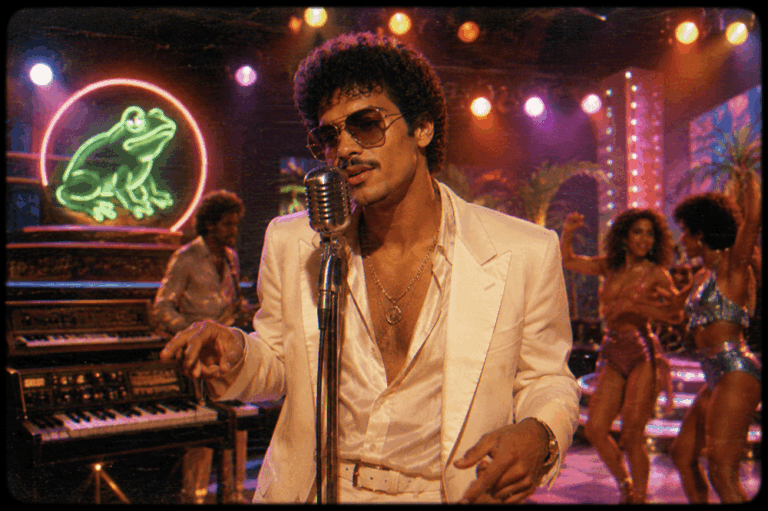
The official video places Mars behind a piano in a retro television-studio setting.
He wears formal clothing and performs directly toward the camera while a drink rests nearby.
The limited setting reflects the song’s emotional isolation.
There is no actress portraying the former partner and no detailed reenactment of the breakup. Her absence is more important than showing her physically.
The visual style suggests an older televised performance, giving the song a timeless quality. It could belong to a nightclub, variety program or late-night broadcast from an earlier era.
The video was directed by Bruno Mars and Cameron Duddy. Its simplicity keeps the focus on Mars’ face, piano playing and growing emotional intensity.
Why does the video use a retro style?
The retro presentation matches the song’s classic ballad structure.
“When I Was Your Man” does not depend heavily on electronic production or trends closely associated with one year. Its voice-and-piano arrangement recalls earlier generations of soul and pop singers.
The old-fashioned setting also makes the narrator appear as though he is performing from inside a memory.
The soft lighting, formal clothes and television framing give the video a nostalgic quality.
That nostalgia fits a song about looking backward and understanding the past too late.
Which album includes “When I Was Your Man”?
The song appears as the sixth track on Bruno Mars’ second studio album, Unorthodox Jukebox.
The album was released in December 2012 and also includes “Locked Out of Heaven,” “Treasure,” “Gorilla” and “Young Girls.” The full sequence is listed on Mars’ official album page.
The title Unorthodox Jukebox reflects the record’s mixture of styles.
The album moves between pop, rock, soul, reggae influences and sexually confident material. “When I Was Your Man” stands out because it removes much of that playful confidence.
The narrator is not charming someone or celebrating desire.
He is admitting that charm did not make him a good partner.
How successful was “When I Was Your Man”?
“When I Was Your Man” reached No. 1 on the Billboard Hot 100 in April 2013.
It became Mars’ fifth No. 1 on the chart at that point in his career and followed the chart-topping success of “Locked Out of Heaven.”
In the United Kingdom, the song peaked at No. 2 on the Official Singles Chart. It remained in the UK Top 40 for 19 weeks during its original run and later returned to the chart in 2023. Its full performance can be viewed through the Official Charts archive.
The song was also nominated for Best Pop Solo Performance at the 2014 Grammy Awards. The official Recording Academy category page lists it alongside recordings by Lorde, Sara Bareilles, Katy Perry and Justin Timberlake.
Did the song receive a Diamond certification?
Yes.
In May 2021, the Recording Industry Association of America announced that “When I Was Your Man” had received Diamond certification, representing more than 10 million certified units in the United States.
The achievement helped Mars become the first artist in the RIAA program’s history to hold five Diamond-certified singles at the same time. The certification announcement is available through the RIAA’s official report.
The certification shows that the song remained popular well beyond its original 2013 chart run.
Its direct emotional story allowed it to continue reaching listeners through streaming, covers, televised performances and personal playlists.
Why do so many people relate to the song?
The song describes a form of regret that is easy to recognize.
Many people understand a relationship more clearly after it ends.
Distance can reveal:
- How much emotional work the other person performed
- Which requests were repeatedly ignored
- How often pride prevented compromise
- Which ordinary moments were valuable
- How avoidable some conflicts were
- How deeply someone’s presence shaped everyday life
During the relationship, these details may feel small.
Afterward, they become the entire story.
Listeners may connect the song to:
- Forgetting anniversaries or important dates
- Prioritizing work over a partner
- Avoiding affection
- Refusing to attend events together
- Assuming someone would never leave
- Dismissing repeated requests for attention
- Realizing an apology came too late
- Watching an ex become happier with someone else
The song does not offer the fantasy that every mistake can be repaired.
Sometimes the lesson arrives after the opportunity has passed.
Is the song about love languages?
The song can be interpreted through the idea that people express and receive love differently.
The narrator may have believed that his feelings were obvious. His partner appears to have needed those feelings expressed through quality time, affection, gestures and shared activities.
The problem was not necessarily that he felt nothing.
The problem was that the relationship did not consistently allow her to experience what he felt.
This distinction appears in many relationships.
One person may express love by working hard or solving practical problems. The other may need conversation, touch or intentional time together.
Neither person’s preferences are automatically wrong.
The relationship becomes vulnerable when partners dismiss each other’s needs as unnecessary or unreasonable.
“When I Was Your Man” shows what can happen when someone understands their partner’s emotional language only after losing access to the relationship.
Is regret enough to prove someone has changed?
No.
Regret can motivate change, but it does not guarantee it.
The narrator now understands what he should have done. Listeners cannot know whether he would actually behave differently in another relationship.
People often become emotionally clear when consequences are immediate. The harder test is whether that understanding changes future habits.
Real growth would require him to:
- Listen before a relationship reaches crisis
- Express affection without being forced
- Make time consistently
- Compromise without viewing it as defeat
- Notice a partner’s needs
- Admit mistakes earlier
- Avoid assuming love guarantees permanence
The song captures realization, not completed transformation.
That makes it more believable.
The narrator is at the beginning of accountability.
Is “When I Was Your Man” a healthy apology song?
It contains several healthy elements.
The narrator accepts responsibility, avoids insulting the former partner and does not demand that she leave her new relationship.
He wishes her well even though her happiness with another man hurts him.
However, the song also reveals how easily regret can become self-focused.
He spends most of the time describing how painful the consequences are for him.
A healthy apology must consider the harm experienced by the other person, not only the guilt experienced by the person apologizing.
The narrator appears to be moving toward that understanding.
His hope that she receives better treatment suggests he finally recognizes that her needs were legitimate.
What can listeners learn from the song?
The song’s clearest lesson is that appreciation should not be postponed.
Relationships are rarely sustained by feelings alone. They depend on repeated behavior.
The narrator’s regrets suggest several practical truths:
- Do not assume someone knows how you feel.
- Make time before absence creates it for you.
- Small gestures can carry large emotional meaning.
- Participating in a partner’s joy is part of intimacy.
- Pride can destroy what it claims to protect.
- Repeated disappointment can exhaust even strong love.
- An apology may be sincere and still arrive too late.
- Learning from a loss matters even when the loss cannot be reversed.
The point is not that every relationship can or should be saved.
It is that people should not wait until a relationship ends to become curious about what their partner needed.
Is the song ultimately hopeful?
The story itself does not offer reconciliation.
The former partner has moved on, and the narrator must live with the consequences of his choices.
Yet there is a limited form of hope in his accountability.
He is no longer pretending that the breakup was mysterious or unfair. He recognizes the role his behavior played and can describe what love should have looked like.
That knowledge cannot repair the old relationship.
It may prevent him from repeating the same pattern in a future one.
The song’s hope therefore belongs less to the romance and more to the possibility of personal growth.
Final meaning
“When I Was Your Man” is about a man who understands how to love his partner only after she has stopped being his.
During the relationship, pride, ego and selfishness prevented him from giving her enough time, affection and attention. He assumed she would remain despite repeatedly feeling unappreciated.
After she leaves, every ordinary detail becomes evidence of what he lost.
The empty room shows her absence.
Their song on the radio transforms happiness into pain.
Conversations with friends remind him that he can no longer avoid responsibility.
The flowers, hand-holding and dancing represent simple acts of care he could have offered but did not.
His apology is sincere, yet sincerity cannot reverse time.
Another man now has the opportunity to create the happiness the narrator once postponed.
The final wish is painful because it combines love with acceptance. He hopes she is treated well, even though good treatment from someone else will continually remind him of his failure.
The deepest lesson of “When I Was Your Man” is not that expensive romance saves relationships.
It is that love must become visible while the person is still there to receive it.
Once they leave, understanding what you should have done may change you—but it may no longer change the ending.