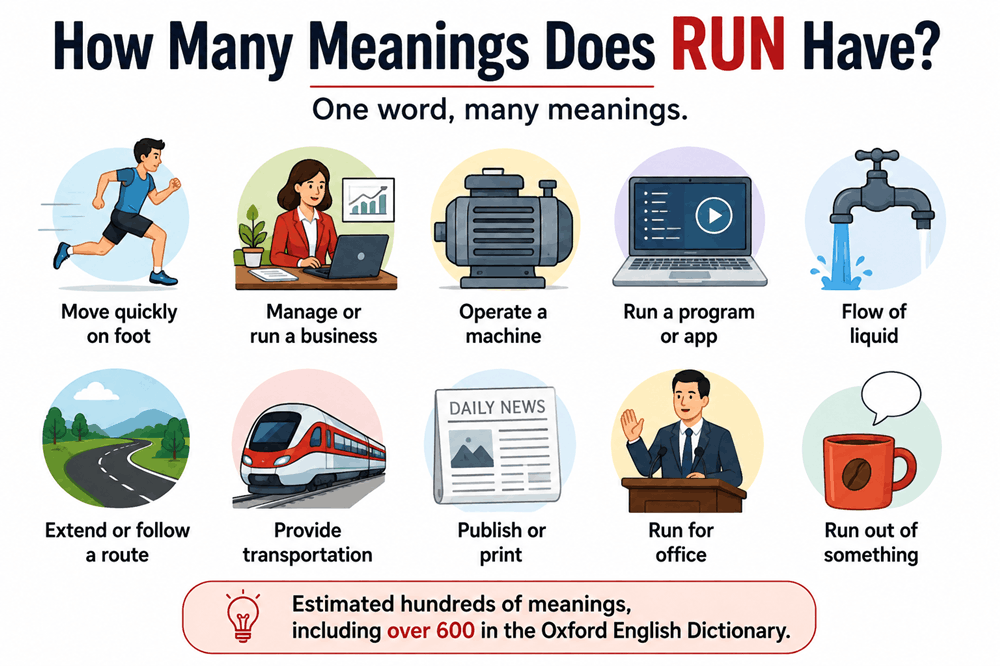
How Many Meanings Does Run Have? Why This Simple Word Has So Many Uses
The word “run” has hundreds of meanings and uses, making it one of the most versatile words in English. There is no single universally accepted number because dictionaries divide meanings differently. The current Oxford English Dictionary entry for the verb run lists 245 meanings, including 27 labeled obsolete, while the widely repeated claim that run has 645 meanings comes from a broader count associated with the OED’s revised treatment of the word. :contentReference[oaicite:0]{index=0}
That enormous number makes more sense when you realize that “run” does much more than describe moving quickly on your feet. A person can run a business, a machine can run, water can run, a road can run through a town, a newspaper can run a story, paint can run, a politician can run for office, and a theater production can have a successful run.
So, Exactly How Many Meanings Does “Run” Have?
The most accurate answer is:
There is no one fixed number.
How many meanings “run” has depends on what counts as a separate meaning.
One dictionary may combine several closely related uses under a single definition.
Another may separate those uses into individual senses.
Dictionaries may also count:
- Verb meanings
- Noun meanings
- Adjective uses
- Idioms
- Phrasal verbs
- Technical meanings
- Historical meanings
- Obsolete meanings
That is why you may see numbers ranging from a few dozen major definitions to several hundred individual senses.
The famous figure of 645 meanings is useful as a way of showing just how complicated the word is, but it should not be understood as the one permanent official answer.
Why Does “Run” Have So Many Meanings?
“Run” is an extremely old English word.
Over centuries, speakers began applying the basic idea of movement to more and more situations.
At first, running describes physical movement:
“She runs every morning.”
But the idea easily extends to other kinds of movement.
Water runs downhill.
A road runs along the coast.
A crack runs across a wall.
A train runs between two cities.
From there, the word expands again.
If a machine continues moving, it is running.
If an organization continues operating, someone is running it.
If a show continues being performed, it has a run.
The meanings feel different today, but many developed naturally from the same broad ideas of movement, continuation, operation, and direction.
1. Run Meaning “Move Quickly on Foot”
This is the meaning most people learn first.
Example: “He runs five miles every morning.”
Here, run means moving faster than walking using your legs.
It is the core physical meaning behind many later uses.
2. Run Meaning “Leave Quickly”
Run can mean escaping or moving away quickly.
Example: “They heard the alarm and ran.”
The related phrase “run away” also comes from this meaning.
3. Run Meaning “Manage a Business”
You can run a company, restaurant, school, organization, or department.
Example: “She runs a small clothing business.”
Here, nobody is physically running anywhere.
Run means to manage, control, or operate something. Modern dictionaries treat this as one of the major everyday meanings of the verb. :contentReference[oaicite:1]{index=1}
4. Run Meaning “Operate a Machine”
A machine can run when it is switched on and operating.
Example: “The engine has been running for an hour.”
You can also run a machine:
“Run the washing machine before you leave.”
5. Run Meaning “Use a Computer Program”
Technology created another extremely common use.
Example: “Run the program and see whether it works.”
You might also:
- Run an app
- Run a virus scan
- Run a script
- Run software
- Run a test
This meaning developed naturally from the idea of making a system operate. :contentReference[oaicite:2]{index=2}
6. Run Meaning “Flow”
Liquids can run.
Example: “Tears ran down her cheeks.”
You can also say:
“The river runs through the valley.”
or:
“Let the water run for a minute.”
This sense connects physical movement with flowing liquid.
7. Run Meaning “Have a Runny Nose”
If your nose is running, liquid is coming from it.
Example: “My nose has been running all morning.”
This is another extension of the liquid-flow meaning.
8. Run Meaning “Follow a Route”
Roads, paths, wires, fences, and boundaries can run somewhere.
Example: “The road runs along the coast.”
Nothing is actually moving.
Run describes the direction or position of something long and continuous.
9. Run Meaning “Provide Transportation”
Buses and trains run between locations.
Example: “The last train runs at midnight.”
A transportation company can also run additional buses or trains.
This use combines movement with scheduled operation.
10. Run Meaning “Continue for a Period of Time”
A movie, play, event, contract, or television series can run for a certain length of time.
Example: “The show ran for three years.”
A subscription may run for twelve months.
A meeting may run longer than expected.
11. Run Meaning “Publish Something”
A newspaper, magazine, or website can run a story.
Example: “The newspaper ran the story on its front page.”
Here, run means to publish or present something.
12. Run Meaning “Become a Candidate”
Politicians run for office.
Example: “She decided to run for mayor.”
The person is competing for a political position rather than literally running toward it.
13. Run Meaning “Organize an Event”
You can run a competition, meeting, class, campaign, or experiment.
Example: “He runs a weekly training session.”
Run here means to organize or conduct something.
14. Run Meaning “Cost”
In informal English, run can describe price.
Example: “A new laptop like that could run you $1,500.”
The phrase means:
“It could cost you $1,500.”
This is a very different meaning from physical running, but it is common in conversational English. :contentReference[oaicite:3]{index=3}
15. Run Meaning “Smear or Spread”
Colors, ink, makeup, and paint can run.
Example: “The ink ran when the paper got wet.”
You might also say:
“Her mascara started to run.”
This meaning is related to liquid spreading beyond its intended position.
16. Run Meaning a “Hole in Stockings”
As a noun, a run can mean a long damaged area in tights or stockings.
Example: “She noticed a run in her stockings.”
This use is particularly common in American English. :contentReference[oaicite:4]{index=4}
17. Run Meaning “A Jog or Running Session”
Run can be a noun describing an occasion of running.
Example: “I’m going for a run after work.”
This is closely connected with the basic verb meaning.
18. Run Meaning “A Point in Baseball or Cricket”
A run is also a scoring unit in baseball and cricket.
Example: “The team scored three runs.”
This meaning is so familiar to sports fans that “run” often sounds like an entirely different word in that context.
19. Run Meaning “A Series of Similar Events”
A run can mean several similar things happening consecutively.
You might have:
- A run of good luck
- A run of bad weather
- A run of victories
- A run of defeats
Example: “The team ended its five-game winning run.”
20. Run Meaning “A Period of Performances”
A theater production can have a run.
Example: “The musical enjoyed a successful six-month run.”
The same idea can apply to movies or television shows.
21. Run Meaning “Repeated Production”
Factories and publishers can use run to describe a quantity produced at one time.
You might hear:
“a production run”
or:
“a print run of 10,000 copies.”
Here, run refers to one continuous period or batch of production.
22. Run Meaning “A Trip or Journey”
A run can be a short regular journey.
Example: “I need to make a grocery run.”
Other examples include:
- School run
- Airport run
- Coffee run
- Delivery run
23. Run Meaning “Escape”
The expression “make a run for it” means to escape quickly.
Example: “When the guard looked away, they made a run for it.”
Someone “on the run” is usually trying to avoid being caught.
24. Run Meaning “Continue Through a Family”
A characteristic can run in a family.
Example: “Musical talent runs in their family.”
This means the characteristic appears repeatedly among relatives.
The same expression can be used for physical traits or health conditions.
25. Run Meaning “Reach a Certain Level”
Run can describe something remaining at a certain numerical level.
Example: “Temperatures are running higher than normal.”
A business might also say:
“Costs are running at $20,000 per month.”
Common Phrasal Verbs With Run
One major reason “run” feels as though it has endless meanings is the number of expressions created by combining it with other words.
Run Away
To escape or leave.
“The dog ran away.”
Run Into
To meet someone unexpectedly.
“I ran into an old friend.”
It can also mean physically colliding:
“The car ran into a fence.”
Run Out
To use all of something.
“We ran out of milk.”
Run Over
To hit something with a vehicle.
“Be careful not to run over the curb.”
It can also mean exceeding an expected time:
“The meeting ran over by 20 minutes.”
Run Through
To review or practice something.
“Let’s run through the presentation once more.”
Run Down
Run down can mean several things itself.
It may mean:
- Criticize someone
- Become weak or depleted
- Hit someone with a vehicle
- Find someone after searching
This demonstrates how quickly the number of meanings grows once phrasal verbs are included.
Does “Run” Have More Meanings Than “Set”?
“Set” was long famous for having one of the largest entries in major English dictionaries.
During work on the newer Oxford English Dictionary, however, “run” became widely reported as surpassing “set” when its many senses were analyzed in greater detail. That history is where the frequently quoted 645 figure originated. :contentReference[oaicite:5]{index=5}
The competition is mostly interesting linguistic trivia.
There is no absolute scientific rule determining exactly when two related uses should count as separate meanings.
Is “Run” the Word With the Most Meanings in English?
It is often described that way, especially in discussions of dictionary sense counts.
However, saying one English word definitively has “the most meanings” is difficult because dictionaries organize word senses differently.
Words such as:
- Set
- Go
- Take
- Get
- Make
- Put
- Run
all have unusually large numbers of uses.
They are common, old words that English speakers have repeatedly adapted to new situations.
Why Doesn’t “Run” Feel Like It Has Hundreds of Meanings?
Most speakers never memorize hundreds of definitions.
They do not need to.
Context automatically narrows the possibilities.
Consider these sentences:
“I run every morning.”
“I run a restaurant.”
“The engine is running.”
“The river runs through town.”
“They’re running the story tomorrow.”
“She’s running for president.”
“We’ve run out of coffee.”
You probably understood every sentence immediately.
Your brain used the surrounding words to choose the appropriate meaning without consciously consulting a dictionary.
Why Is “Run” a Good Example of Polysemy?
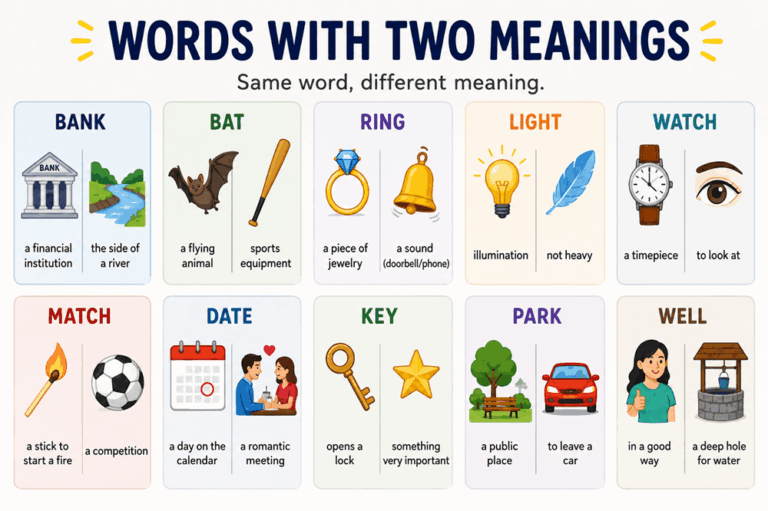
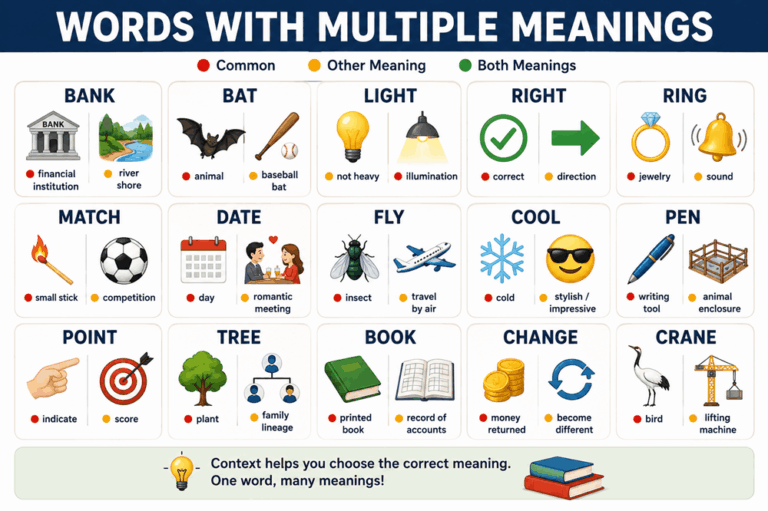
Polysemy occurs when one word develops multiple related meanings.
“Run” is an excellent example because many of its uses can still be connected conceptually.
Movement becomes flow.
Flow becomes continuation.
Continuation becomes operation.
Operation becomes management.
As these extensions accumulate over centuries, one short word develops a remarkable range of meanings.
How Do You Know Which Meaning of Run Is Correct?
Look at what comes immediately before and after the word.
Compare:
Run five miles — move quickly on foot.
Run a company — manage.
Run a program — operate software.
Run water — cause water to flow.
Run for office — become a candidate.
Run a story — publish.
Run out — use everything available.
The surrounding nouns, prepositions, and context usually make the meaning obvious.
The Bottom Line
So, how many meanings does “run” have?
The answer depends on how meanings are counted.
The Oxford English Dictionary’s current verb entry lists hundreds of individual senses, while the famous claim that “run” has 645 meanings comes from a broader lexicographical count that helped make the word famous as one of the most complex in English. :contentReference[oaicite:6]{index=6}
What matters more than the exact number is the remarkable variety of ways the word can be used.
You can run down a street.
Run a company.
Run a computer program.
Run water into a bath.
Run for political office.
Run a newspaper story.
Run out of money.
Go for a run.
Score a run.
Or enjoy a successful run of performances.
All of those meanings belong to the same three-letter word.
That is what makes “run” such an extraordinary example of how flexible English can be.