Is Listening to Music a Hobby? Why It Absolutely Counts as One
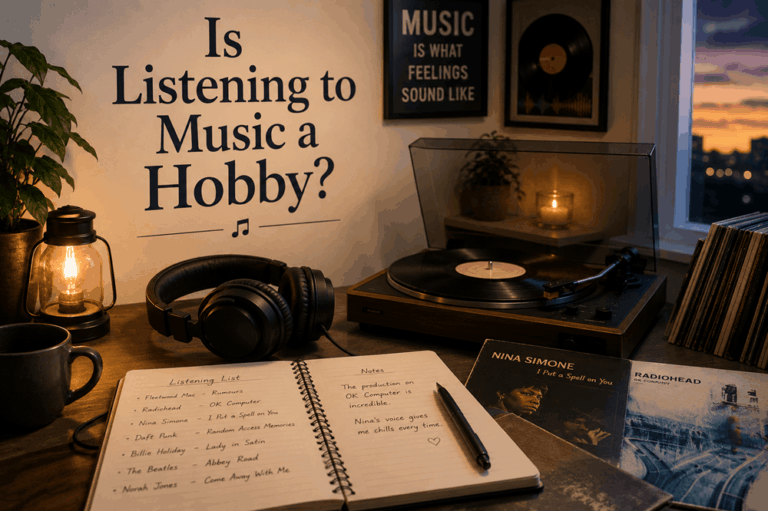
Yes, listening to music can absolutely be a hobby. A hobby is something you regularly choose to do for enjoyment, relaxation, curiosity, or personal fulfillment, and music listening easily fits that definition. It becomes even more clearly a hobby when you actively explore artists, build playlists, collect records, attend concerts, learn about genres, or spend dedicated time listening closely rather than simply leaving music on in the background.
Is Listening to Music Really a Hobby?
Listening to music can be a hobby just as reading books, watching movies, gardening, gaming, photography, or collecting records can be hobbies.
The important distinction is intention.
If music happens to be playing while you wash dishes, drive to work, or sit in a coffee shop, you probably would not describe that particular moment as participating in a hobby.
But if you regularly choose albums, search for new artists, make playlists, compare recordings, follow musicians, or set aside time specifically to listen, music has become an activity you pursue for enjoyment.
That is essentially what a hobby is.
A hobby does not need to produce something physical. You do not have to build furniture, paint pictures, or grow vegetables for an activity to count.
Sometimes the experience itself is the hobby.
What Makes Something a Hobby?
Most hobbies share a few basic characteristics.
They are generally voluntary, enjoyable, repeated over time, and separate from the obligations of work or everyday survival.
A person chooses to participate because the activity provides something valuable: relaxation, excitement, knowledge, creativity, community, or simply pleasure.
Listening to music can provide all of those things.
Someone who spends every Friday evening exploring new albums is engaging with music differently from someone who happens to hear a song in a supermarket.
The first person has created a deliberate recreational practice.
That is a hobby.
Passive Listening and Active Listening Are Different
The question becomes more interesting when you separate passive listening from active listening.
Passive listening happens when music accompanies another activity.
You might play a playlist while cleaning, exercising, studying, commuting, or cooking. You enjoy the music, but it is not necessarily your main focus.
Active listening is different.
You deliberately pay attention to the song.
You might notice the bass line, vocal harmonies, lyrics, production choices, rhythm changes, guitar tone, or way one song transitions into another.
You may listen to the same album several times and hear something different each time.
That kind of focused listening makes music feel much more like a traditional hobby because you are developing attention, knowledge, and preferences through repeated participation.
You Do Not Need to Play an Instrument to Have Music as a Hobby
People sometimes assume that saying “music is my hobby” means you sing or play an instrument.
It does not.
Making music and listening to music are separate activities.
You can love films without making movies. You can enjoy novels without writing fiction. You can follow basketball without playing competitively.
The same logic applies to music.
A listener can have deep knowledge of jazz, metal, classical music, hip-hop, country, electronic music, or pop without knowing how to play a single note.
Musical appreciation is its own form of engagement.
When Does Listening to Music Become a Serious Hobby?
There is no official point where casual listening suddenly becomes a hobby.
It usually happens gradually.
You hear one artist you like and explore the rest of the catalog.
That leads to related musicians.
Then you start comparing albums, reading about producers, exploring older genres, searching for live performances, or tracking down obscure songs.
Eventually, you realize you are not simply consuming whatever music happens to reach you.
You are actively exploring it.
For some people, this develops into record collecting. Others become interested in audio equipment, concerts, music history, playlists, songwriting analysis, or discovering unknown artists.
All of those can become separate hobbies built around listening.
Building Playlists Can Be Part of the Hobby
Creating playlists may look simple, but people who take it seriously know how much thought can go into one.
A good playlist has flow.
The first song establishes a mood. The next few tracks develop it. Energy rises or falls intentionally. Songs may connect through subject, genre, tempo, memory, or atmosphere.
A person might make playlists for road trips, workouts, rainy evenings, breakups, parties, studying, cooking, or different seasons.
Some listeners spend hours arranging them.
At that point, playlist building becomes almost like curating a small radio station.
It is creative even though you did not write the music yourself.
Album Listening Can Be a Hobby on Its Own
Streaming has encouraged people to listen to individual songs, but albums can offer a very different experience.
An album may have a deliberate sequence, recurring themes, transitions, emotional progression, or production style connecting its songs.
Listening from beginning to end allows you to experience those choices.
You may begin noticing why a quiet song appears after an aggressive one, why a certain track opens the record, or why the final song feels like a conclusion.
Some listeners keep lists of albums they want to hear, rate them afterward, or try to work through famous records from different decades.
That can easily become a lifelong hobby.
Discovering New Music Makes the Hobby Almost Endless
One advantage of music listening is that you will probably never run out of material.
Even someone who listens for several hours every day will encounter only a tiny fraction of the music that exists.
You can explore different decades, countries, languages, scenes, and genres.
A person who begins with modern pop might eventually discover soul, funk, disco, punk, jazz, folk, reggae, blues, classical music, Afrobeats, electronic music, or styles they previously did not even know existed.
Each discovery creates another path.
You might hear one singer, learn who influenced them, then go backward through those artists and eventually discover an entire musical tradition.
That sense of endless exploration is one reason music works so well as a hobby.
Collecting Vinyl Records Can Deepen the Experience
For some people, listening eventually becomes connected with collecting.
Vinyl records are the most obvious example.
A record collection turns music into something physical.
You search for particular pressings, examine artwork, read liner notes, organize shelves, and experience the ritual of placing a record on the turntable.
CDs and cassettes can create a similar experience.
The physical object gives the music context that can disappear when every song exists inside the same streaming app.
You certainly do not need physical media for music to count as a hobby, but collecting can make the hobby more tangible.
Going to Concerts Can Be Part of a Music Hobby
Live music adds another dimension.
A recording stays essentially the same every time you play it.
A concert does not.
The band may change the arrangement. The crowd may sing part of the song. A guitar solo may last longer. A quiet track may suddenly become enormous in an arena.
People who love live music often plan trips around concerts, follow tour dates, collect tickets or posters, and compare different performances.
For them, music listening becomes connected with travel, community, and memory.
Learning About Music Can Be Part of Listening
You do not have to study music academically to become curious about how it works.
Listening often leads naturally to questions.
Who wrote this song?
What does the lyric mean?
Why does this guitar sound different?
What instruments are being used?
What influenced this album?
Why does this chorus feel so powerful?
Following those questions can make listening much richer.
You may start recognizing production styles, song structures, recurring chord patterns, samples, influences, or connections between artists.
Knowledge changes what you hear.
Can Listening to Music Be a Creative Hobby?
Yes, even though listening itself is receptive rather than productive.
Creativity can appear in how you interact with the music.
You can curate playlists, write album reviews, make music journals, create ranking lists, design cover art for personal playlists, discuss interpretations, photograph concerts, or build themed collections.
You might also use listening as inspiration for writing, drawing, dancing, fashion, photography, or another hobby.
Music often becomes a starting point for other forms of creativity.
Is Listening to Music a Good Hobby for Relaxation?
For many people, yes.
Music can provide a clear boundary between work and personal time.
Putting on an album after a long day can become a ritual that signals you are finished with obligations for a while.
Different kinds of music can also suit different moods.
You may want quiet instrumental music when tired, loud rock when frustrated, energetic pop when exercising, or familiar songs when you want comfort.
The value is not simply distraction.
Music can give a mood somewhere to go.
Can Listening to Music Be a Social Hobby?
Music can be intensely private, but it can also create community.
Friends exchange recommendations.
Fans discuss new albums.
People attend concerts and festivals together.
Online communities form around genres, artists, record collecting, audio equipment, and music history.
Even disagreements can be part of the fun.
Ask several music fans to rank a band’s albums and you may get completely different answers.
Those conversations are part of the hobby because taste develops partly through comparison and discovery.
Is Music Listening a Hobby Worth Mentioning on a Resume?
Usually, simply writing “listening to music” on a professional resume does not add much information.
It is a very common interest.
However, a more specific music-related hobby can sometimes be useful if it reveals something relevant about you.
For example, “vinyl record collecting,” “concert photography,” “music journalism,” “DJing,” or “independent music discovery” communicates more than simply saying you enjoy songs.
The same principle applies to conversations and personal profiles.
Specificity makes the interest more meaningful.
Instead of saying only “I like music,” you might say you enjoy exploring 1970s soul albums, collecting jazz records, making running playlists, or attending local concerts.
Is Listening to Music Too Passive to Count as a Hobby?
No.
This argument would exclude many widely accepted hobbies.
Reading involves receiving words written by someone else. Watching films involves experiencing something created by filmmakers. Following sports often involves watching other people play.
None of those activities stops being a hobby simply because the participant is not creating the original material.
Attention matters.
Curiosity matters.
Enjoyment matters.
If you deliberately choose to spend your free time engaging with music, there is no meaningful reason it cannot count as a hobby.
How Can You Turn Listening to Music Into More of a Hobby?
If music currently feels like background entertainment, a few simple habits can make listening more intentional.
Try listening to one full album each week.
Explore one unfamiliar genre each month.
Keep a list of favorite albums or songs.
Build playlists around specific ideas rather than relying entirely on automated recommendations.
Read about the musicians you discover.
Compare studio recordings with live versions.
Visit a local record store.
Attend a concert by an artist you have never seen before.
You do not need to do all of these things.
The goal is simply to move from hearing music accidentally to exploring it intentionally.
Do You Need to Be an Expert for Music to Be Your Hobby?
Absolutely not.
Hobbies are not competitions.
You do not need to know music theory, identify every instrument, own expensive headphones, memorize chart history, or recognize thousands of artists.
You can be deeply enthusiastic about music and still know very little about its technical construction.
The point of a hobby is that you enjoy participating.
Knowledge may grow naturally over time, but expertise is not a requirement.
The Bottom Line
Yes, listening to music is a hobby when you intentionally spend your free time enjoying and exploring it.
You do not need to play an instrument or produce music yourself.
Listening to albums, discovering artists, building playlists, collecting records, attending concerts, reading about music, and comparing different performances are all legitimate ways of participating in music as a hobby.
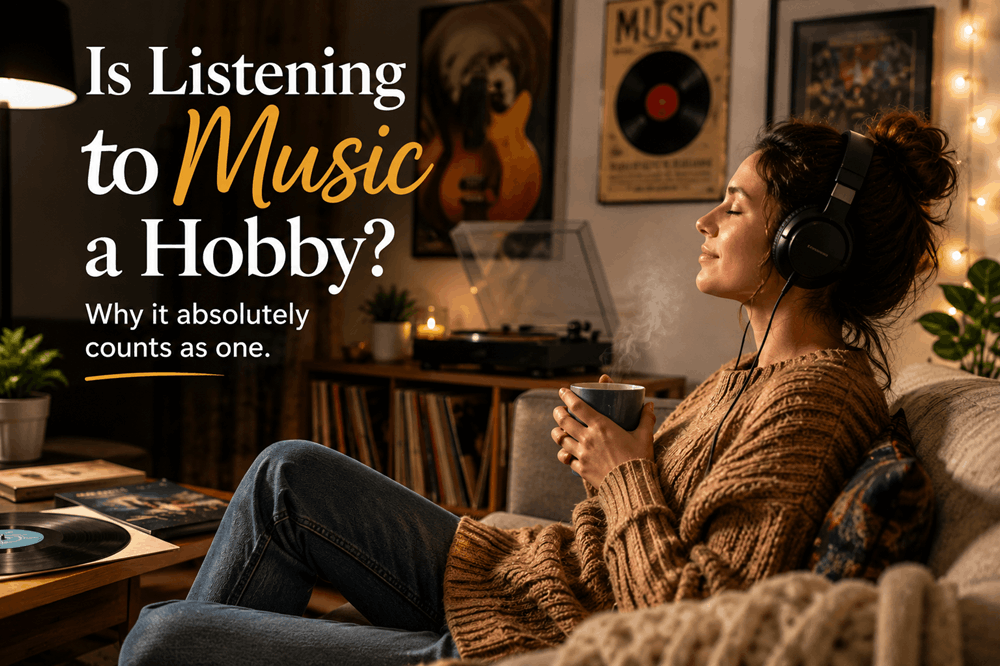
Even simply sitting down with headphones and giving an album your full attention can count.
The difference between background noise and a hobby is often intention.
If music is something you regularly choose because exploring it brings you pleasure, curiosity, comfort, or excitement, then listening to music is not merely something you do.
It is one of your hobbies.