
“House Tour” Lyrics Meaning: Sabrina Carpenter’s Flirty Invitation Is Built on One Big Joke
Sabrina Carpenter’s “House Tour” is a playful song about inviting a date home for an intimate encounter while pretending to discuss interior design.
The joke is not that the song hides its meaning particularly well. The joke is that Carpenter keeps insisting everything is completely innocent even as nearly every room, entrance and household feature becomes suggestive.
That contradiction gives “House Tour” its personality. Carpenter behaves like a proud homeowner conducting a polite tour, but her real interest is not architecture. The house represents her body, her private world and the kind of temporary intimacy she is willing to offer.
Yet the song is not simply a collection of double meanings. Beneath its exaggerated confidence, it also presents a woman controlling the invitation. She decides who enters, how the tour proceeds and which boundaries remain in place.
The visitor may be welcomed inside, but Carpenter is still the owner.
What is “House Tour” about?
“House Tour” begins at the end of what appears to have been a successful date.
The narrator compliments the conversation and even notices an insignificant detail about her date’s car. When they reach her home, she does not want the evening to end. Instead of directly asking the other person to stay, she offers a tour.
The invitation initially sounds domestic and harmless. She can show the visitor every floor, point out the comfortable furniture and offer a snack. However, the language quickly makes it obvious that the “tour” represents something more intimate.
Carpenter makes the double meaning even funnier by briefly insisting that it is not a metaphor. That denial functions as an invitation to hear the exact opposite.
The house can therefore be understood on two levels:
- It is the literal setting where the date continues.
- It represents Carpenter’s body, sexuality and private space.
The song never asks listeners to choose only one interpretation. Its humor depends on both meanings remaining active at the same time.
Why does Carpenter pretend the metaphor is not a metaphor?
The funniest line in the song may be Carpenter’s promise that “none of this is a metaphor.”
The statement is obviously unconvincing.
By the time she makes it, she has already offered to guide her visitor through multiple floors and encouraged that person to enter. The language is too deliberately suggestive to be accidental.
Her denial resembles someone making an inappropriate joke and then adopting an innocent expression. She knows exactly how the words sound, and she knows the listener knows.
That creates a kind of shared performance. Carpenter is not attempting to fool anyone. She is inviting the audience to participate in the pretense.
This style has become central to her pop persona. Her songs often combine polished femininity with unusually direct jokes. Rather than presenting desire through solemn confession, she exaggerates it until it becomes theatrical.
In “House Tour,” the fake innocence also protects the song from becoming emotionally heavy. The narrator is not declaring eternal devotion or revealing a devastating secret. She is enjoying attraction, recognizing an opportunity and turning the situation into a comedy routine.
She can say what she wants while pretending to discuss furniture.
The house represents both the body and the self
The most obvious interpretation is that the house represents Carpenter’s body.
Different floors suggest different possibilities. Doors become boundaries. Entering the house becomes physical intimacy, while the tour guide role allows Carpenter to direct the experience.
However, the metaphor can extend beyond the body.
A home is also a private environment shaped by its owner’s preferences. Its rooms, decorations and layout reveal something about the person who lives there. Inviting someone inside can therefore represent emotional access as well as sexual access.
Carpenter proudly describes the house as something she has designed and invested in. Read symbolically, she is not treating herself as a passive object waiting to be admired. She presents herself as the architect.
She has built this identity. She knows what she likes. She decides how it will be presented.
That distinction is important. The song may use the language of availability, but it does not give the visitor control. Carpenter remains the person holding the keys and conducting the tour.
The house is open because she chooses to open it.
Why is she so proud of the house’s design?
Carpenter repeatedly behaves as though her main motivation is pride in her decorating work.
That explanation is deliberately absurd. A person usually does not invite a date inside late at night because the couch arrangement urgently needs to be appreciated.
But her pride carries a second meaning.
The narrator is comfortable with her appearance and aware of her attraction. She does not approach intimacy apologetically. Instead, she presents herself as something carefully constructed, valuable and worth experiencing.
The idea of “design” may also refer to Carpenter’s public image.
Her music, costumes and performances frequently combine retro glamour, exaggerated femininity and comic innuendo. The result looks effortless, but it is highly controlled. “House Tour” turns that artistic persona into a fictional property with multiple rooms.
Listeners are not merely being shown a house. They are being invited deeper into the elaborate character Carpenter performs: charming, glamorous, self-aware and always one joke ahead of the person pursuing her.
The song’s confidence comes from knowing that the performance is convincing without pretending it is natural.
The ordinary household details make the joke work
“House Tour” would be less effective if every line were openly provocative.
Instead, Carpenter fills the song with ordinary details: a self-driving car, an air freshener, a couch, cookies, polished floors and insurance.
These objects create contrast.
The narrator sounds like someone making nervous conversation after a date, using whatever happens to be nearby to delay saying goodnight. Her attention jumps from the car to the smell inside it and then to the furniture in her home.
That surface-level awkwardness makes the underlying confidence more entertaining. She is simultaneously:
- Pretending to be casual
- Inventing reasons for the date to continue
- Making her intentions unmistakable
- Acting as though nothing unusual is happening
The reference to Chips Ahoy also contributes to the deliberately artificial domestic mood. The snack is almost childishly ordinary beside the adult innuendo surrounding it.
Some listeners have theorized that the cookie reference and retro atmosphere were inspired by a suggestive 2005 Chips Ahoy commercial, although no confirmed statement from Carpenter has established that connection.
Whether intentional or not, the detail fits the song because it transforms seduction into something resembling a brightly colored advertisement.
“You don’t need to love me” changes the emotional stakes
One of the song’s most revealing ideas is that the visitor does not need to be in love.
This separates “House Tour” from songs in which physical intimacy is used to secure commitment.
Carpenter’s narrator does not appear to be bargaining. She is not offering access in exchange for a relationship, nor is she pretending that one evening automatically creates a romantic future.
That makes the invitation sound unusually direct.
At the same time, the line can contain a hint of emotional self-protection. By announcing that love is unnecessary, the narrator avoids asking whether it might be possible. She controls expectations before the other person has an opportunity to disappoint her.
The confidence may therefore be real, but it may also be strategic.
Carpenter often places vulnerability beneath a comic surface. The narrator can appear completely in command while still using humor to prevent the situation from becoming emotionally serious.
In “House Tour,” she permits desire but limits its meaning.
The visitor may enter the house. That does not mean the visitor receives permanent ownership.
What does the “back door” line mean?
The warning concerning the back entrance is one of the song’s least subtle jokes.
On the literal level, the narrator is telling her visitor how to enter the property. On the suggestive level, the phrase introduces a sexual boundary.
The important part is not merely the joke itself. It is the fact that the narrator states a limit.
The rest of the song is inviting and generous. She offers access to multiple floors, says that what belongs to her can temporarily be shared and promises an enjoyable experience. The back-door restriction shows that openness is not the same as unlimited permission.
Consent remains specific.
Agreeing to one form of intimacy does not mean agreeing to every possible form. Carpenter communicates that distinction without interrupting the song’s playful tone.
The line therefore strengthens the narrator’s authority. She is not simply available. She is setting the terms under which access will be granted.
Why mention waxed floors and insurance?
The polished floors continue the song’s body metaphor. They suggest preparation, grooming and effort—the house has been made ready for a visitor.
Insurance introduces another comic idea. Because the property is protected, the pair can supposedly behave recklessly without worrying about damage.
That confidence is knowingly unrealistic. Insurance cannot prevent consequences; it can only offer protection after something has happened.
Symbolically, the narrator acts as though emotional and physical risk can be controlled as easily as household damage. She wants the excitement of recklessness while maintaining the security of ownership.
The line may therefore be read as another performance of confidence.
She claims the situation is safe, contained and free of lasting consequences. Whether intimacy can ever be managed that neatly is less certain.
The song does not pause to explore that uncertainty because its purpose is fantasy. For a few minutes, every risk is covered, every room is prepared and no one needs to discuss tomorrow.
How the production supports the meaning
“House Tour” appears on Carpenter’s seventh studio album, Man’s Best Friend, released on August 29, 2025. The track was written by Carpenter with Amy Allen, Jack Antonoff and John Ryan, while Carpenter, Antonoff and Ryan handled production.
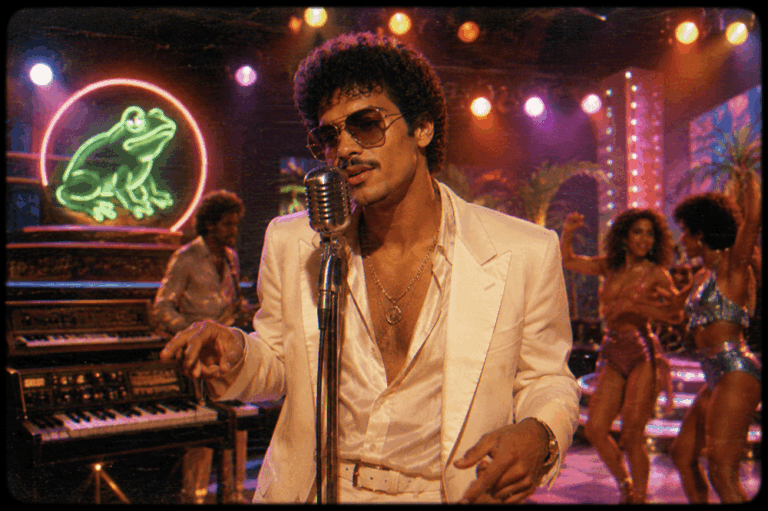
Its bright synth-pop production draws on dance-pop, post-disco and glossy 1980s sounds. Critics compared its energetic retro style to artists such as Janet Jackson and Paula Abdul.
That musical approach is essential to the song.
A slower or more intimate arrangement could make the lyrics feel overly serious. Instead, the brisk rhythm turns the invitation into a commercial, exercise routine and game-show presentation at once.
Carpenter does not sound as though she is revealing a secret. She sounds like a cheerful television host unveiling a grand prize.
The production creates several useful contrasts:
- The music is polished while the jokes are deliberately obvious.
- The voice sounds sweet while the meaning is adult.
- The setting appears domestic while the invitation is reckless.
- The narrator sounds welcoming while remaining completely in control.
The result is not a realistic bedroom confession. It is an exaggerated pop performance about desire.
The Guardian praised Man’s Best Friend for combining provocative humor with unusually detailed pop craftsmanship, identifying “House Tour” as one of the album’s campier highlights.
What the music video adds
The official “House Tour” video, released on April 6, 2026, does not simply show Carpenter welcoming a romantic interest into her own home. Instead, Carpenter, Margaret Qualley and Madelyn Cline play a group of stylish thieves who enter a luxurious mansion, enjoy its contents and remove its valuables. Carpenter and Qualley co-directed the video.
That reversal changes the meaning of ownership.
In the song, Carpenter appears to be the proud owner inviting someone into her carefully designed private space. In the video, the women enter a property that does not belong to them and behave as though it does.
The visual therefore transforms the house from a metaphor for Carpenter’s body into a playground of female appetite.
The women take clothes, luxury objects and even a Grammy. They do not wait to receive permission, approval or gifts. They enter, choose what interests them and leave the empty property behind.
This does not mean the video provides the one definitive interpretation of the lyrics. It deliberately replaces the song’s date-night story with a crime comedy.
However, both versions share the same attitude: women control the tour.
In the song, Carpenter decides who receives access to her house. In the video, the women decide that the entire house is available to them.
The fantasy has expanded from personal confidence into cheerful lawlessness.
Confirmed meaning versus interpretation
Carpenter has not publicly provided a detailed line-by-line explanation establishing one official meaning for every image in “House Tour.”
What is clear from the lyrics is that the song uses a home visit as an extended series of sexual double meanings. Contemporary reviews consistently recognized that central joke, and the official lyric presentation preserves the contrast between Carpenter’s innocent delivery and the obvious innuendo.
Ideas about the house representing emotional privacy, artistic identity or Carpenter’s constructed public persona are interpretations.
They fit the language of ownership, design and controlled access, but they should not be mistaken for confirmed statements from Carpenter.
That distinction does not weaken the interpretation. It simply recognizes that the song is designed to remain light. Carpenter gives listeners enough architectural language to build additional meanings without forcing the song to carry a serious message it never explicitly announces.
Final meaning
“House Tour” is a witty song about inviting someone home while pretending the invitation is entirely architectural.
Its central joke comes from denial. Carpenter describes entrances, floors, furniture and household maintenance, then acts as though no metaphor exists. The less convincingly she denies the double meaning, the funnier the song becomes.
But the narrator’s confidence is more important than any individual joke.
This is her house. She designed it, invested in it and decides how it can be entered. She may share it for one evening, but the invitation remains hers to extend and define.
The song treats intimacy as a tour rather than a surrender.
The visitor is welcome to come inside.
Carpenter still keeps the keys.