
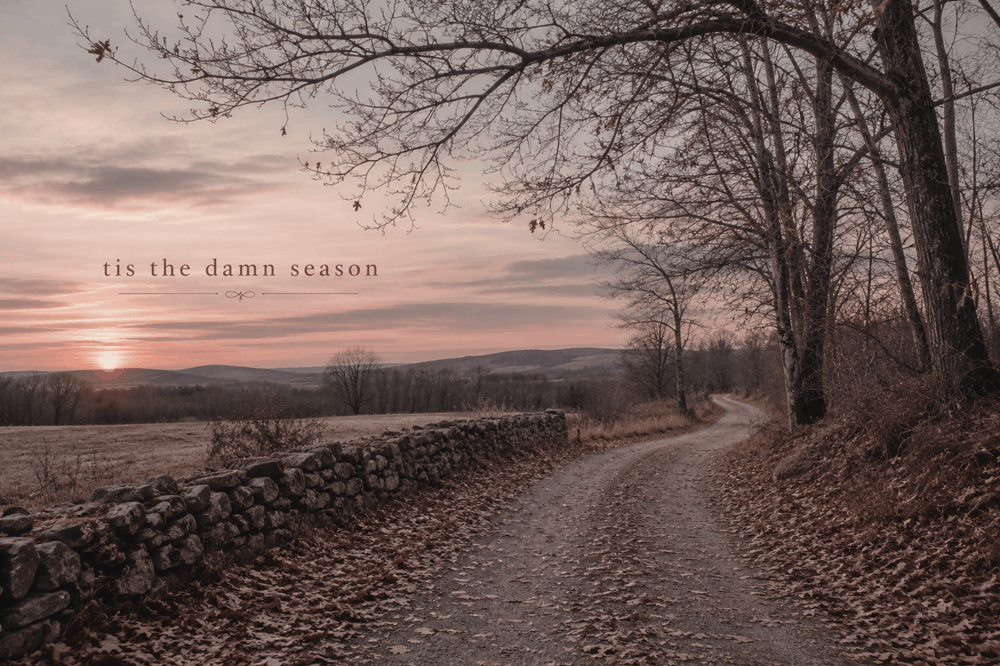
“‘Tis the Damn Season” Lyrics Meaning: Taylor Swift Knows Going Home Cannot Restore the Life She Left
“‘Tis the Damn Season” by Taylor Swift is about returning to your hometown for the holidays, reconnecting with a former lover and temporarily pretending that the choices separating you do not matter.
The narrator has built a different life far away. She has new ambitions, new friends and a public version of herself that may look successful from the outside. Back home, however, she meets the one person who remembers who she was before she started performing that new identity.
Their reunion offers comfort, desire and familiarity.
It does not offer a permanent future.
That is the song’s central conflict:
The narrator wants the emotional safety of her old relationship without abandoning the life she chose when she left.
She knows the holiday reunion will end. She also knows that returning home has exposed how lonely her supposedly exciting life has become.
“‘Tis the Damn Season” is therefore not a romantic story about two people finally finding their way back to each other.
It is about borrowing an old life for a few winter days because the present one no longer feels entirely real.
What is “‘Tis the Damn Season” about?
The song follows a woman who returns to her hometown during the holiday season and encounters someone she once loved.
Time has passed since their relationship ended. Both people have continued living, and the narrator does not ask for a complete account of whom her former partner has dated or what happened while she was away.
She proposes something simpler and more dangerous:
For the duration of her visit, they can behave as though the distance between them never became permanent.
The arrangement seems casual, but the narrator’s memories reveal that the relationship still carries deep emotional weight. She remembers the roads, the school they attended, the family home and the ordinary places that shaped their younger lives.
Those details make the reunion feel intimate in a way her current life does not.
The narrator may now have glamorous friends and greater opportunities, but her former lover remains the person who can recognize when her happiness is only a performance.
The holiday season creates a temporary emotional exception
The title turns a traditional Christmas phrase into an excuse.
The holiday season already interrupts normal life. People travel home, revisit family traditions and enter places filled with older versions of themselves. Daily routines pause, and relationships that seemed settled can briefly feel unfinished again.
The narrator uses that interruption to justify reconnecting with her ex.
It is the season.
They are both available.
The past is physically close.
They can allow themselves one temporary mistake.
Calling it “the damn season” adds frustration to the familiar festive expression. The narrator is not experiencing uncomplicated holiday warmth. She is being pulled toward memories she had managed more successfully from a distance.
The season becomes both permission and blame.
If she returns to the relationship, she can tell herself that the holidays made it inevitable.
Going home makes her old identity feel available again
Returning home does not simply bring the narrator closer to a former partner.
It brings her closer to the person she was before leaving.
The hometown contains physical evidence of that earlier self. Familiar streets, school grounds and family routines remain in place even though she has changed.
This can make personal growth feel strangely unstable.
Far away, the narrator may confidently understand herself as someone who escaped, succeeded or became more sophisticated. At home, she is once again the person who drove those roads and loved someone before her future became complicated.
Her former partner strengthens that effect because he knew her before the reinvention.
He does not need the polished explanation she gives her newer friends.
He remembers the original version.
The cold weather reflects emotional distance
Winter is not merely a seasonal background.
The fogged glass, icy roads and heavy atmosphere reflect the distance that has formed between the two people.
They recognize each other, but the years apart have created uncertainty. The narrator can feel the old connection without clearly seeing what a renewed relationship would become.
Fog is an especially effective image because it does not completely hide the road.
It makes moving forward more dangerous.
The narrator can see enough to continue, but not enough to know where the decision will lead.
This resembles the holiday reunion itself. She understands the immediate desire. She cannot see a believable future beyond it.
Their pain appears to mirror each other
The narrator recognizes hurt in her former partner and believes some of it was caused by her departure.
She also carries pain created by leaving him.
This mutual damage makes the reunion feel less like one person exploiting another and more like two people agreeing to suspend an unresolved loss.
Neither is entirely innocent.
Neither is entirely healed.
Their attraction survives because the original relationship did not end through a complete loss of feeling. It ended because the narrator chose another life.
That difference matters.
A relationship destroyed by betrayal may become impossible to revisit. A relationship ended by geography and ambition can remain emotionally idealized because neither person has to confront whether ordinary life together would actually have worked.
They lost possibility rather than proving incompatibility.
Possibility is much harder to bury.
The arrangement is casual only on the surface
The narrator presents the reunion as something temporary and uncomplicated.
They can spend time together while she is home. They do not need to discuss the future or demand promises from each other.
But the language surrounding that proposal is too emotionally detailed to be truly casual.
She notices his pain.
She remembers their shared past.
She imagines an alternative life.
She admits that he understands her better than the people surrounding her now.
These are not the thoughts of someone entering a meaningless holiday fling.
The casual arrangement protects her from having to admit what she still wants.
If she calls the reunion temporary from the beginning, she can leave without technically breaking another promise.
The road not taken represents an entire unlived life
The narrator begins imagining what might have happened if she had stayed.
This alternative path is attractive because it has never been tested.
In the unlived version of her life, the relationship may have remained tender, honest and uncomplicated. She may have found enough happiness at home that she never needed the opportunities she pursued elsewhere.
The fantasy does not include boredom, resentment or the possibility that the couple would have separated for another reason.
Unchosen lives often appear cleaner than real ones because they contain no evidence of failure.
The narrator looks toward the abandoned path precisely when her chosen one feels disappointing.
That does not prove staying would have been better.
It proves that success has not eliminated doubt.
Mud and winter roads make time feel physical
The song’s road imagery turns the passage of time into something messy and visible.
The narrator has traveled far from her hometown, but the emotional traces of leaving remain attached to her. Distance did not create a clean separation.
Like mud carried on tires, the past has traveled with her.
This is one of the song’s most realistic ideas.
People often imagine leaving as a decisive act: one city ends, another begins. In reality, old relationships, family expectations and earlier identities continue appearing inside the new life.
The narrator may have reached Los Angeles, but part of her remains on the roads she used to drive with this person.
The holiday return makes that emotional residue impossible to ignore.
Why did she leave?
The narrator appears to have left for ambition, freedom and a larger world.
The companion song “dorothea” presents a hometown figure watching a woman pursue fame and new social circles. Swift described one of evermore’s storylines as a woman leaving her small town for Hollywood and later returning for the holidays, where she rediscovers an old flame. “‘Tis the Damn Season” is widely understood as that returning woman’s perspective.
Leaving was not necessarily a mistake.
The narrator wanted more than the town could offer, and remaining might have required suppressing an important part of herself.
The tragedy is that growth demanded a loss she could never fully replace.
She gained movement, opportunity and a new identity.
She lost the person who knew her without needing the finished version.
Los Angeles represents both achievement and performance
The narrator’s distant life appears glamorous but emotionally unreliable.
She has friends, social access and a reason to remain away. Yet she privately questions how genuine those connections are.
Los Angeles functions less as a literal judgment of everyone in the city than as a symbol of a life organized around appearance.
The narrator may be surrounded by people who know her career, image or social value without understanding her emotional reality.
Her former lover possesses the opposite kind of knowledge.
He may know less about her current world, but he can identify the difference between her real happiness and the version she displays publicly.
That recognition makes him difficult to leave again.
Being understood becomes more valuable than being admired
The narrator’s current life may provide attention.
Her hometown lover provides recognition.
Attention is directed toward what a person displays. Recognition reaches what they are trying to conceal.
The song suggests that the narrator has learned the difference only after obtaining the life she once wanted.
She may have imagined that success would surround her with people and remove the loneliness associated with leaving home. Instead, it has created relationships in which she is increasingly unsure whether anyone knows the person beneath the public identity.
Her ex does.
This is why the reunion threatens the life she has built.
He reminds her that admiration cannot fully replace intimacy.
Why does she still plan to leave?
The narrator’s awareness does not change her decision.
She will return to Los Angeles.
This may seem contradictory. If the hometown relationship feels more honest and the life away feels artificial, why not stay?
Because love is not her only value.
She still wants the world she left to pursue. Her ambition, independence and curiosity remain real even when they make her lonely.
Staying would require more than choosing the man.
It would mean choosing the town, its limitations and an identity she has already outgrown in important ways.
She wants the relationship.
She does not necessarily want the life surrounding it.
That is the problem neither person can solve.
The former lover is treated like an emotional home
The narrator returns to him in the same way she returns to familiar roads and family spaces.
He represents safety through recognition and repetition. She does not need to explain how she became the person she is now because he remembers what came before.
But treating a person as home can become unfair.
A home is expected to remain available when someone returns. A person has a life, needs and the ability to be hurt.
The narrator asks him to accept temporary closeness while knowing she plans to leave again.
She understands that this may deepen his pain.
Her honesty does not remove the cost.
The song is less romantic than it first appears
The reunion is affectionate, but the narrator establishes an ending before it begins.
She does not promise to reconsider her life. She does not offer a plan for closing the distance. She asks for comfort under conditions that preserve her ability to leave.
This makes the song unusually adult.
Neither person needs to be a villain.
They can love each other and still want incompatible lives.
The narrator is not pretending the relationship lacks meaning. She is refusing to let its meaning determine every other choice.
The former lover may accept because a few days with her feel better than complete absence.
That does not mean the arrangement will leave him unharmed.
“Dorothea” provides the other side of the relationship
On evermore, “dorothea” is commonly read as the hometown lover addressing the woman who left.
From his perspective, her new life has made her distant but not unrecognizable. He remembers her before fame, polished friends and public attention.
His position is more openly hopeful.
The hometown remains available. So does his affection.
“‘Tis the Damn Season” complicates that hope by revealing that Dorothea’s return does not mean she is prepared to stay.
She misses him.
She trusts him.
She can imagine the life they might have shared.
She still leaves.
Together, the songs create a relationship in which both people recognize the connection but cannot agree on where a shared future should happen. Rolling Stone identified the tracks as two perspectives on the same hometown romance, with few of the neat conclusions found in more traditional love stories.
The song began during the Long Pond sessions
Swift wrote “‘Tis the Damn Season” during the period when she, Aaron Dessner and Jack Antonoff gathered at Long Pond Studio to film Folklore: The Long Pond Studio Sessions.
Dessner recalled that after an evening of playing music and drinking wine, Swift wrote the song and presented it the following morning. He had previously created the instrumental foundation and considered it one of his favorite pieces; Swift’s narrative transformed it into the final song.
The speed of the writing suits the track.
It feels like a memory returning before the narrator has time to organize it into a safer explanation.
The story contains the impulsiveness of someone who arrives home, sees one familiar person and suddenly understands everything she has been avoiding.
Aaron Dessner’s guitar makes memory feel unavoidable
The production is built around a circular electric-guitar figure and restrained programmed drums.
The guitar does not resolve cleanly. It continues returning with the persistence of a thought the narrator cannot dismiss.
Strings, keyboards, organ, harmonium and lap steel expand the atmosphere without turning the track into a conventional holiday arrangement. The official credits list Swift and Dessner as writers, Dessner as producer and instrumental contributions from Clarice Jensen, Josh Kaufman, Thomas Bartlett, Benjamin Lanz, Nick Lloyd and Yuki Numata Resnick.
The music sounds wintry without relying on festive bells or cheerful nostalgia.
It captures the cold distance between the narrator’s two lives.
Why the melody feels larger than the private story
Although the lyrics describe a quiet hometown reunion, the chorus opens with unusual emotional scale.
The music makes the private decision feel enormous because, to the narrator, it is.
She is not merely deciding whether to spend a night with an ex. She is standing between two complete versions of herself.
One version stayed.
One left.
The reunion allows both to exist briefly in the same place.
That is why the song worked effectively in the evermore section of the Eras Tour before the set was restructured in May 2024. Its restless guitar and widening chorus could fill a stadium without losing the intimacy of the original story.
How the song fits evermore
Evermore repeatedly explores relationships that cannot be repaired through desire alone.
People love each other after timing, grief, ambition or emotional damage has made simple reunion impossible. The Recording Academy has described the album as particularly interested in unhappy endings, including the temporary relationship in “‘Tis the Damn Season.”
The song belongs perfectly within that world.
It does not ask whether the feelings are genuine.
They clearly are.
It asks whether genuine feelings are enough to overcome two lives moving in opposite directions.
The answer appears to be no.
That does not make the reunion meaningless.
It makes it temporary.
Confirmed background versus interpretation
It is confirmed that Swift and Aaron Dessner wrote “‘Tis the Damn Season,” with Dessner producing the song for evermore, released on December 11, 2020. The official lyric video was released through Swift’s official channel, while the album credits document its Long Pond recording and detailed instrumentation.
Swift’s album framing connects a Hollywood-bound woman named Dorothea with a holiday return and an old hometown flame. The exact emotional motives assigned to each line—the idea that the casual arrangement protects the narrator from admitting what she wants, or that Los Angeles represents admiration without recognition—are interpretations based on the song’s imagery and its connection with “dorothea.”
Final meaning
“‘Tis the Damn Season” is about returning to the one person who still feels like home while knowing you cannot remain in the life that contains them.
The narrator has achieved part of what she wanted by leaving.
She escaped the town, entered a larger world and built an identity that once seemed worth the sacrifice.
Going home reveals the cost.
Her new friends may admire her, but her former lover understands her. Her current life may offer possibility, but the old relationship offers emotional recognition she has not successfully replaced.
For a few winter days, she allows herself to live inside the road she did not take.
She does not pretend the reunion will solve anything.
When the season ends, she will leave again.
That is what makes the song more painful than a story about simple regret.
The narrator does not discover that she chose the wrong life.
She discovers that choosing any life means losing another one.