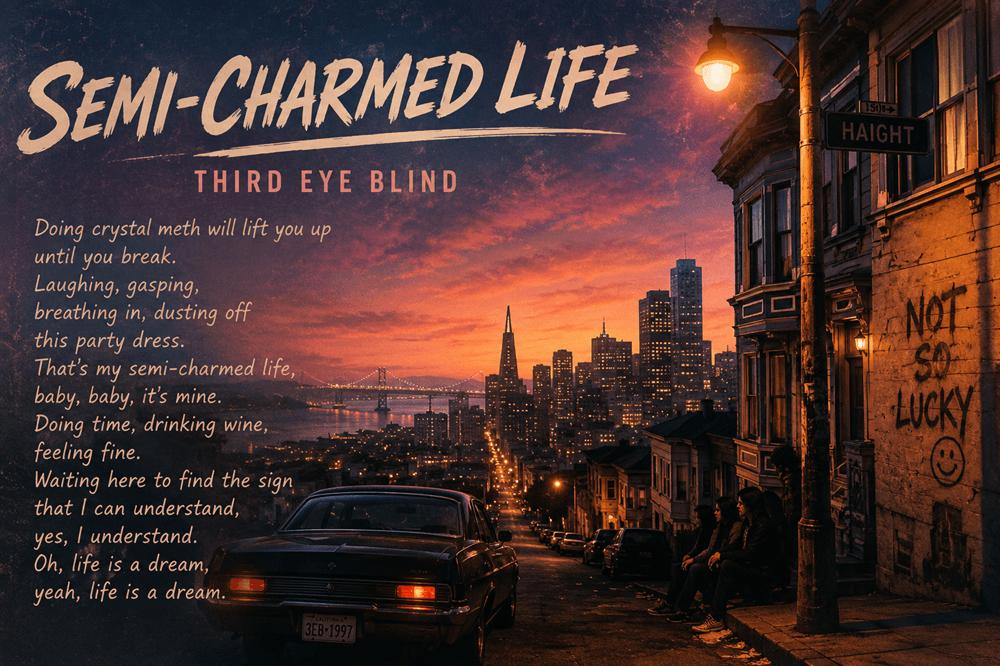
“Semi-Charmed Life” Lyrics Meaning: Third Eye Blind’s Bright Song About Addiction, Desire and Never Feeling Satisfied
Third Eye Blind’s “Semi-Charmed Life” is about a couple chasing pleasure through drugs, physical intimacy and constant stimulation while their lives gradually fall apart.
The music sounds joyful, energetic and almost weightless. Underneath that bright surface, however, the narrator describes crystal meth use, emotional dependency, physical deterioration and a relationship that cannot survive the lifestyle surrounding it.
The song’s central meaning is:
Temporary pleasure can make a damaged life feel beautiful for a moment, but the desire to repeat that feeling eventually creates a deeper emptiness.
The narrator is not satisfied with ordinary life. He continually wants another experience intense enough to distract him from loss, boredom and uncertainty.
That is why the song is called “Semi-Charmed Life.”
His life sometimes feels magical, but the charm is incomplete. Every high is temporary, every beautiful moment is already disappearing and every attempt to return to happiness pushes him further away from it.
Listeners can watch Third Eye Blind’s official “Semi-Charmed Life” music video. The song appeared on the band’s self-titled debut album, released in 1997.
What is “Semi-Charmed Life” about?
“Semi-Charmed Life” follows a narrator caught in a cycle of desire.
He remembers a relationship filled with excitement, sex, drugs, photographs, city nights and the feeling that ordinary limits no longer applied. Those experiences briefly made life seem brighter and more meaningful.
But the pleasure does not last.
The narrator repeatedly seeks:
- Another drug-induced high
- Another intense physical connection
- Another return to the happiest period of the relationship
- Another distraction from emotional pain
- Another reason not to accept that the relationship is ending
Each attempt provides temporary relief while making the larger situation worse.
Stephan Jenkins has described the song as being literally connected to crystal meth use but also as a broader metaphor for living in a constant state of longing. He said its deeper subject is wanting something that remains unreachable and continually trying to return to what has already been lost.
The song is therefore not only about drugs.
Drug use is the most extreme expression of a more familiar emotional condition:
Nothing feels sufficient for very long.
What does “semi-charmed life” mean?
A charmed life is usually one marked by good fortune, beauty and apparent ease.
A semi-charmed life looks fortunate without being completely fulfilling.
The narrator possesses many things commonly associated with youth and freedom:
- Romance
- Attraction
- Parties
- Music
- Urban adventure
- Intense emotion
- A sense of rebellion
From the outside, his life might look exciting.
Inside it, he feels increasingly desperate.
The word “semi” exposes the gap between appearance and reality. The lifestyle has enough charm to keep him returning, but not enough to make him genuinely happy.
It offers:
- Pleasure without stability
- Intimacy without emotional security
- Energy without direction
- Escape without recovery
- Excitement without lasting satisfaction
The title does not describe a completely miserable life.
That would be easier to leave.
It describes a life that remains attractive enough to trap the person living it.
Is the song really about crystal meth?
Yes. Crystal meth use is a direct part of the narrative.
Jenkins has explained that the song grew from experiences around San Francisco’s Lower Haight neighborhood, where people in his social circle were entering adulthood, experimenting heavily and confronting the instability that followed life after school.
The drug represents several things in the song:
- Artificial confidence
- Increased energy
- Intense pleasure
- Sexual urgency
- The illusion of control
- A rapid escape from ordinary dissatisfaction
- A cycle that becomes physically and emotionally destructive
Methamphetamine can create a powerful sense of stimulation, but the song emphasizes the collapse that follows.
The narrator keeps trying to reproduce the high even though he understands that the experience is damaging him.
This is one of the clearest signs of addiction.
Knowledge of harm does not automatically produce the ability to stop.
Why does the song sound so happy?
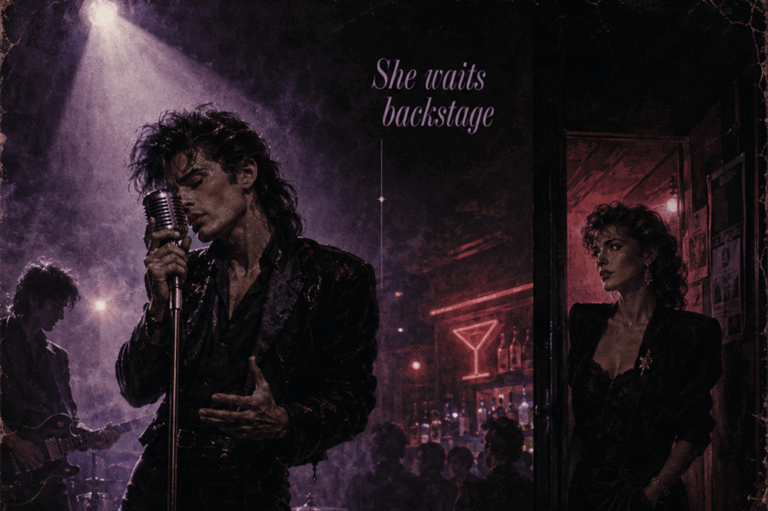
The joyful sound is deliberate.
The guitars are bright, the rhythm moves quickly and the opening vocal pattern feels playful enough to belong to a carefree summer song.
Jenkins explained that he wanted the music to resemble the substance being described: bright and exciting at first, then increasingly destructive. He also connected the rapid vocal delivery with the band’s interest in hip-hop.
The contrast works on several levels.
The music represents the high
The speed and brightness reproduce the narrator’s excitement rather than the consequences he will face later.
The lyrics represent the reality
Beneath the melody are dependency, regret and physical decline.
The listener experiences the deception
Many people enjoy the song before recognizing its subject. That reaction mirrors the narrator’s attraction to a lifestyle whose danger is hidden beneath pleasure.
The arrangement prevents a simple moral lesson
A slow, gloomy recording would tell listeners immediately how to feel. The upbeat music allows the attraction and danger to exist simultaneously.
The song does not ask why anyone would enter such a lifestyle.
It lets the audience feel why someone might.
Why do so many people misunderstand the song?
The chorus is memorable, the tempo is energetic and the vocal delivery moves too quickly for many words to register during a casual listen.
As a result, “Semi-Charmed Life” has frequently been heard as a cheerful song about summer, romance or youthful freedom.
The darker details are easy to miss because the recording emphasizes sensation before explanation.
This misunderstanding is part of the song’s design.
Addiction itself often begins with something that feels positive:
- Confidence
- Energy
- Belonging
- Escape
- Pleasure
- Relief from emotional discomfort
The consequences arrive later.
The song gives listeners the attractive surface first and allows the disturbing meaning to emerge gradually.
Who is the woman in the song?
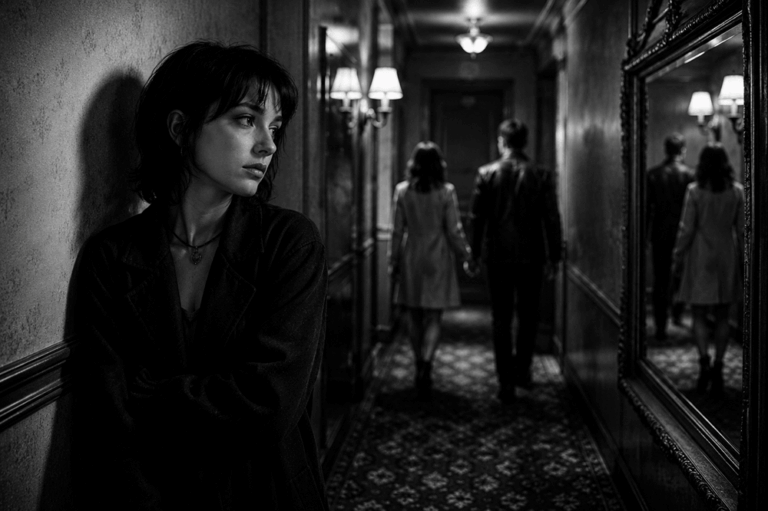
The woman is both a romantic partner and part of the narrator’s destructive lifestyle.
Their relationship appears intensely physical, emotionally dependent and closely connected with drug use.
The narrator remembers her through:
- Photographs
- Clothing
- Physical closeness
- Shared intoxication
- Trips through the city
- Moments that felt larger than ordinary life
She is not simply the innocent partner of someone with an addiction.
The two appear to participate in the same cycle.
Yet the narrator’s memories may not provide a complete account of her experience. He describes her largely through desire and nostalgia, which means the listener sees her through the perspective of someone trying to recover a lost feeling.
She may represent:
- A real former partner
- The lifestyle itself
- Youthful freedom
- The drug-induced high
- A period before consequences became unavoidable
The narrator misses her, but he also misses the person he believed he was when they were together.
Is the song a love story?
It contains love, but it is not a healthy love story.
The relationship provides emotional and physical intensity, yet it does not create security.
The couple seems connected through shared escape rather than through a stable ability to face life together.
Their bond may depend on:
- Drugs
- Sexual attraction
- Risk
- Mutual dissatisfaction
- A constant search for stimulation
This does not mean their feelings are false.
People inside destructive relationships can genuinely love each other. The problem is that love alone cannot protect them from the patterns surrounding it.
The narrator wants to return to the relationship because it contains some of his strongest memories.
He does not demonstrate that returning would produce a different outcome.
What does the narrator want?
The narrator repeatedly wants “something else.”
That desire is the emotional center of the song.
He may not even know exactly what the “something” is.
It could be:
- Another high
- A restored relationship
- A stronger sense of purpose
- Freedom from boredom
- The return of youth
- A feeling intense enough to make ordinary life disappear
Because the desire remains undefined, nothing can satisfy it permanently.
Every experience becomes valuable only until the narrator begins wanting the next one.
Jenkins described this as a condition of never arriving. The person remains caught between reaching backward toward what has been lost and reaching forward toward something that cannot quite be obtained.
The drug storyline is an extreme version of that condition, but the emotional pattern is widely recognizable.
People may chase:
- Relationships
- Money
- Social approval
- Career success
- Shopping
- Travel
- Attention
- Digital stimulation
The object changes.
The dissatisfaction remains.
Why does he want to return to the past?
The narrator idealizes an earlier stage of the relationship.
He remembers colors, photographs, attraction and the sense that life was beginning rather than collapsing.
Those memories feel vivid because addiction and heartbreak can both make the past appear more beautiful than it was.
He may be remembering:
- The early pleasure without the later consequences
- The intimacy without the conflict
- The stimulation without the crash
- The feeling of possibility before dependency took control
This is selective memory.
The narrator wants to return to a moment that cannot be separated from everything that followed it.
The happiest period and the destructive period belong to the same story.
Returning to one would likely mean returning to both.
What does the golden and rose-colored sky symbolize?
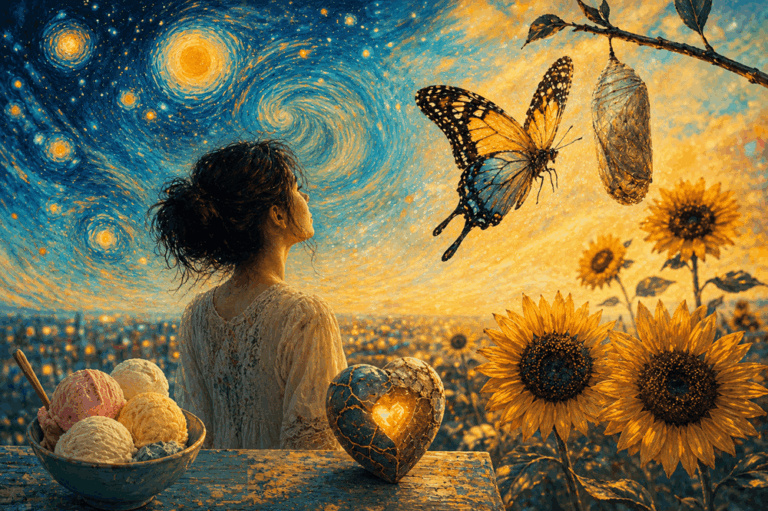
The unusually beautiful sky represents a heightened perception of reality.
Under the influence of drugs, attraction and youthful excitement, ordinary surroundings can appear transformed. Colors become more intense, time feels different and the world briefly seems charged with meaning.
The image can symbolize:
- Intoxication
- Romantic idealization
- A perfect memory
- The false promise of a permanent high
- Beauty experienced immediately before collapse
Gold and rose also resemble nostalgic filters.
The narrator looks backward and remembers the period through warm colors, even though the events themselves were dangerous.
This is how destructive memories can remain attractive.
The mind does not preserve only the pain.
It also preserves the moments that made the pain seem worthwhile.
Why are photographs important?
Photographs freeze a moment without preserving its full context.
A picture may show two people smiling while hiding:
- What they had taken
- What happened afterward
- How unstable the relationship had become
- Whether either person was truly happy
- What the memory now costs them
The narrator appears drawn to photographic evidence of the earlier relationship because it allows him to imagine that the happiness was permanent.
The photograph does not show the crash.
It shows only the appearance of being alive, attractive and connected.
This connects with the title.
The life looks charmed in the picture.
It is only partly charmed in reality.
What does the beach symbolize?
The beach represents physical reality and a simpler form of pleasure.
Sand beneath the feet is immediate, natural and grounding. It contrasts with the artificial stimulation controlling much of the narrator’s life.
The beach may symbolize:
- Sobriety
- Simplicity
- Nature
- Emotional honesty
- A desire to feel present in the body
- The possibility of a life outside addiction
However, the narrator does not remain in that grounded state.
He believes in it, but belief is not the same as being able to live there.
The song repeatedly moves between natural sensory experiences and chemically intensified ones.
The narrator can still recognize what feels real.
He has difficulty choosing it.
Why does music matter inside the song?
The narrator describes simple musical harmony as powerful enough to produce a deep emotional response.
This suggests that music offers another route toward intensity—one that does not necessarily require drugs.
A few chords can create:
- Release
- Memory
- Connection
- Grief
- The feeling of transcendence
- A temporary escape from ordinary consciousness
That is also what “Semi-Charmed Life” itself does.
The song converts addiction, longing and emotional collapse into a bright arrangement that listeners can sing together.
Music does not repair the narrator’s life, but it gives form to feelings that otherwise remain chaotic.
What does the plane imagery represent?
The image of a plane descending or crashing reinforces the emotional trajectory.
The narrator and his partner have been living at an unsustainable height.
Their lifestyle creates the feeling of flight:
- Speed
- Freedom
- Distance from ordinary rules
- A powerful view of life
- Temporary weightlessness
A crash is therefore inevitable.
The song’s characters cannot remain elevated forever. The body, relationship and surrounding world eventually demand payment.
The plane also represents the narrator’s inability to control the descent.
Once the process begins, wanting to return to the high does not stop the fall.
Is the narrator trying to recover?
He recognizes that he is struggling to survive, but recognition has not yet become recovery.
He knows:
- The lifestyle is damaging.
- The relationship has changed.
- The high cannot be maintained.
- He is repeating the same behavior.
- He wants something different.
Yet he remains emotionally attached to the very experiences causing the damage.
This is an important stage in addiction and destructive relationships.
A person may understand the problem intellectually while still craving it physically and emotionally.
The narrator is not celebrating his condition.
He is also not clearly leaving it.
The song captures the unstable space between awareness and change.
Does the title suggest the narrator is privileged?
The word “charmed” can suggest good fortune, but the song is not primarily a criticism of financial privilege.
The narrator’s lifestyle contains social freedom and excitement, yet it is emotionally unstable.
His charm may consist of:
- Youth
- Attraction
- A creative social scene
- Access to parties and drugs
- The belief that consequences belong to the future
The “semi” matters because these advantages never become genuine security.
The narrator may appear fortunate compared with someone living a quieter life, but he cannot experience that apparent fortune as enough.
What inspired Stephan Jenkins to write the song?
Jenkins connected the song with life in San Francisco’s Lower Haight after he and his friends had left school and entered early adulthood.
The period contained freedom, experimentation and the realization that life was becoming less predictable. He has described the song as carrying both the excitement of that transition and the underlying fear that nothing would remain stable.
He also cited Lou Reed’s “Walk on the Wild Side” as an influence on the song’s opening vocal pattern and urban storytelling approach. Jenkins viewed the lives around him as intense enough to inspire a contemporary response to Reed’s earlier portrait of outsiders and drug culture.
The result is not a detached observation.
The song sounds as though the narrator is still inside the experience, unable to decide whether he is remembering paradise or documenting a collapse.
Who wrote and produced “Semi-Charmed Life”?
Current Apple Music credits list Stephan Jenkins, Kevin Cadogan and Arion Salazar as songwriters.
Jenkins performs lead vocals, guitar, percussion and programming. Cadogan plays guitar and contributes background vocals, Salazar plays bass, Brad Hargreaves plays drums and Eric Valentine contributes programming.
Jenkins and Valentine produced the recording, with Valentine also serving as engineer and mixing engineer.
The combination of layered guitars, programmed elements, live drums and rapid vocals gives the recording a polished sound without removing its restless energy.
Why does the vocal delivery feel almost like rap?
Jenkins delivers many lines quickly and rhythmically, placing a large amount of language inside a bright rock arrangement.
He has connected that approach with the band’s interest in hip-hop.
The rapid flow also suits the narrator.
He sounds:
- Overstimulated
- Excited
- Unable to pause
- Desperate to fit every memory into the song
- As though his thoughts are moving faster than he can control them
The vocal style makes the verses feel almost breathless.
That breathlessness reflects both the drug imagery and the fear of losing the remembered experience before it can be fully described.
Why was part of the song edited for radio?
Some radio versions obscured or removed the clearest drug reference.
The decision allowed stations to play the song without broadcasting explicit language about crystal meth use as directly.
This censorship contributed to the misunderstanding surrounding the track.
Listeners heard the bright chorus and playful vocal hook while one of the most obvious clues to the song’s meaning was reduced or hidden.
The radio edit made the song easier to market.
It also made the contrast between sound and subject even more extreme.
What does the music video mean?
The official video was directed by Jamie Morgan and presents an idealized, energetic version of San Francisco.
The band drives, performs and moves through scenes filled with young people, relationships, arguments, attraction and street life. The video does not become a literal warning about methamphetamine.
Instead, it emphasizes the lifestyle’s surface:
- Movement
- Freedom
- Youth
- Community
- Rebellion
- Romantic unpredictability
This approach fits the song’s perspective.
The danger does not arrive looking like a public-service announcement. It exists inside a world that appears exciting and alive.
The official remastered video identifies “Semi-Charmed Life” as Third Eye Blind’s first single from the band’s 1997 debut.
Which album includes “Semi-Charmed Life”?
The song appears as the third track on Third Eye Blind’s self-titled debut album.
The album was released on April 8, 1997, and also includes “Jumper,” “How’s It Going to Be,” “Graduate,” “Motorcycle Drive By” and “God of Wine.”
The record eventually received six-times-platinum certification in the United States and spent more than 100 weeks on the Billboard 200.
“Semi-Charmed Life” introduced many listeners to the band through an accessible pop-rock sound, but the album surrounding it contains similarly serious themes involving addiction, depression, damaged relationships and emotional isolation.
How successful was the song?
“Semi-Charmed Life” became Third Eye Blind’s highest-charting single in the United States.
It reached No. 4 on the Billboard Hot 100 and topped Billboard’s Modern Rock chart. It was later certified gold, and Billboard named it the Modern Rock Track of the Year.
In the United Kingdom, it reached No. 33 and remained in the Official Singles Chart Top 100 for five weeks.
Its commercial success was remarkable because the song’s central narrative involved addiction, sexual desire and emotional collapse.
The bright production helped it cross from alternative radio into mainstream pop without losing the darker story hidden beneath it.
Why did it become a defining 1990s song?
The song captures a particular contradiction associated with the late 1990s.
Its surface expresses:
- Optimism
- Youth
- Economic comfort
- Cultural energy
- The promise of a new life after school
Its narrative expresses:
- Addiction
- Dissatisfaction
- Directionlessness
- Emotional instability
- Fear that freedom has no clear purpose
Many young adults had been taught to pursue education and independence. Reaching adulthood did not automatically tell them what to do with either.
Jenkins described the song as emerging from exactly that transitional period, when his social circle had completed years of schooling and entered a life that suddenly felt open but unreliable.
The song’s mixture of confidence and panic made it more than a catchy summer record.
It became a portrait of people who appeared free while privately wondering whether freedom was enough.
Is “Semi-Charmed Life” a warning?
Yes, but it does not behave like a conventional warning.
It never steps outside the narrator’s experience to provide a moral explanation.
Instead, listeners hear the attraction and consequences together.
The song warns that:
- A temporary high can become the center of life.
- Intensity can be mistaken for intimacy.
- Nostalgia can make destructive periods look beautiful.
- Recognizing a problem does not automatically end it.
- Constantly wanting something else makes the present impossible to inhabit.
The warning is effective because the song remains tempting.
The listener understands why the narrator wants to return even while recognizing that returning would hurt him.
Why does the song remain popular?
“Semi-Charmed Life” succeeds as both an immediate pop-rock song and a darker narrative discovered through closer listening.
Its lasting appeal comes from:
- The instantly recognizable opening
- A rapid and distinctive vocal performance
- Bright guitar hooks
- A chorus built for group singing
- A hidden emotional story
- The contrast between nostalgia and collapse
- A central desire broad enough to apply beyond addiction
The recording also creates a powerful nostalgia of its own.
Listeners may associate it with childhood, school, summer or the late 1990s—even though the narrator is warning that nostalgia can hide the truth about the past.
That irony has helped preserve the song.
What is the deeper meaning of “Semi-Charmed Life”?
The deeper meaning concerns the endless pursuit of a feeling that cannot be made permanent.
The narrator believes happiness exists somewhere:
- In the next high
- In the former relationship
- In the city
- In physical intimacy
- In a photograph
- In an earlier version of himself
He keeps reaching toward those places.
None of them can hold him.
The problem is not only that he wants something destructive.
It is that he has structured his life around wanting itself.
If he obtained one object of desire permanently, he would probably begin searching for another.
That is why the song remains relatable to listeners with no experience of crystal meth.
The addiction storyline reveals an extreme version of a common human struggle:
We imagine satisfaction exists just beyond the life we currently have.
Final meaning
Third Eye Blind’s “Semi-Charmed Life” is about a narrator chasing pleasure through crystal meth, physical intimacy and memories of a relationship that has already begun falling apart.
The music sounds bright because it represents the attraction of the lifestyle.
The narrator experiences moments of color, energy and connection intense enough to make ordinary life seem inadequate. When those moments end, he immediately wants another.
His existence is “semi-charmed” because it contains real beauty but no lasting peace.
He has romance without security, excitement without purpose and escape without freedom.
The narrator recognizes that the high is destroying him. He knows he is struggling rather than thriving.
Yet he continues looking backward toward the period when everything seemed golden.
That is the tragedy inside the song.
The memories are not entirely false.
The pleasure was real.
So were the consequences.
“Semi-Charmed Life” ultimately suggests that the most dangerous forms of dissatisfaction are not those that offer no happiness. They are the ones that offer just enough happiness to keep us chasing them—long after the pursuit has begun taking everything else away.