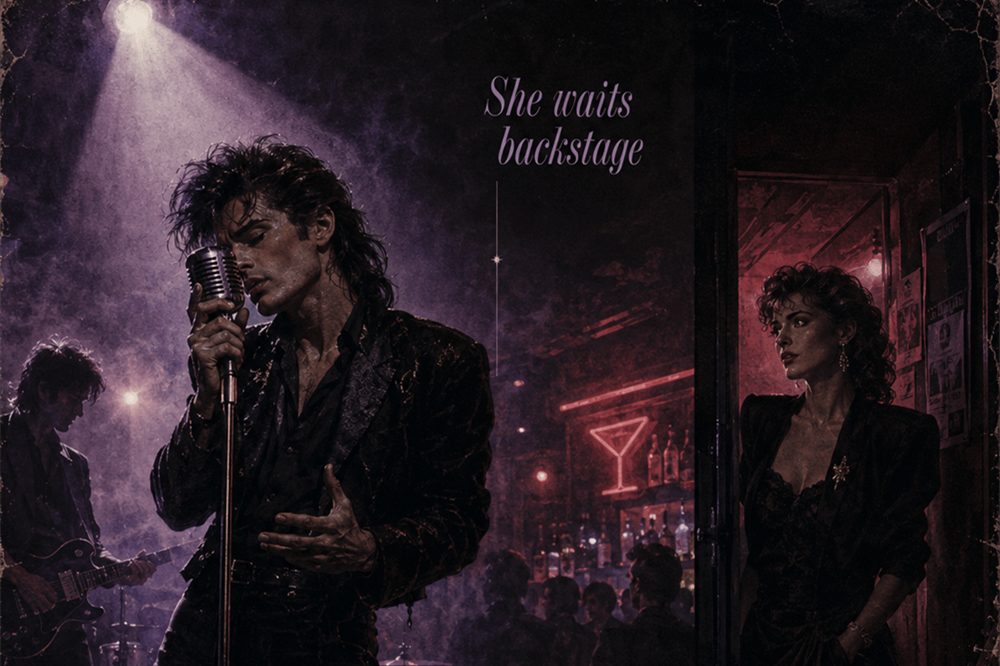
“Dirty Diana” Lyrics Meaning: Michael Jackson’s Song About Temptation, Fame and a Dangerous Backstage Encounter
Michael Jackson’s “Dirty Diana” is about a famous performer trying to resist a woman who pursues musicians and uses their fame, desire and loneliness to gain access to them.
The narrator knows Diana’s intentions. He believes she has approached other performers in the same way and understands how to manipulate men who are far from home. Even so, recognizing the danger does not make him immune to it.
The song’s central meaning is:
Fame creates opportunities for temptation, but the person who recognizes a trap must still take responsibility for whether he enters it.
“Dirty Diana” is darker than a conventional song about attraction. Its narrator is not describing a mutual romance. He sees the encounter as a struggle involving seduction, manipulation, infidelity and the loss of self-control.
Michael Jackson explained that Diana was not Princess Diana or Diana Ross. She represented the groupies he had encountered around performers and concerts throughout his life on the road. (American Songwriter)
Listeners can hear the complete recording through Michael Jackson’s official “Dirty Diana” video.
What is “Dirty Diana” about?
“Dirty Diana” is about temptation surrounding a touring musician.
The narrator encounters a woman who is attracted not only to him personally but also to what he represents: celebrity, excitement, access and life behind the stage.
He has seen this pattern before.
Diana approaches performers, tells them what they want to hear and creates the impression that each encounter is unique. The narrator believes she is repeating a familiar method rather than falling sincerely in love.
He initially tries to reject her. He understands that becoming involved could damage his existing relationship and give Diana emotional power over him.
However, the story becomes increasingly complicated because he is clearly affected by her.
The song explores:
- Sexual temptation
- The loneliness of touring
- The power attached to celebrity
- Fear of infidelity
- Manipulation through desire
- The difficulty of maintaining boundaries
- The narrator’s attempt to avoid responsibility
- The conflict between private commitment and public access
The singer may know Diana is dangerous, but he continues remaining close enough for the danger to grow.
Who is Dirty Diana?
Diana is not presented as a complete, realistic biography of one woman.
She is a character representing a type of person the narrator associates with concert and celebrity culture.
Jackson described the song as being about groupies—people who remain around performers, clubs and backstage environments while seeking romantic or sexual access to musicians. He said the subject came from experiences he had observed during a lifetime of performing.
Diana can therefore be understood as a composite character created from:
- People Jackson encountered during tours
- Stories circulating among musicians
- The pressures surrounding famous performers
- The fear that attraction may be motivated by status
- The exaggerated danger required by a dramatic rock song
She is less important as an individual than as a symbol.
Diana represents the moment when admiration becomes access, access becomes temptation and temptation threatens the performer’s private life.
Is “Dirty Diana” about Princess Diana?
No.
The similarity between the title and Princess Diana’s name created a lasting rumor, but Jackson said the song was not about her.
A famous story connected the two during Jackson’s 1988 Wembley Stadium concert. Knowing that Princess Diana would attend, he reportedly removed “Dirty Diana” from the planned performance because he worried the title might seem disrespectful.
When they met before the show, she asked whether he would perform it and indicated that she liked the song. By then, Jackson said it was too late to return it to the set.
The official Michael Jackson site documents his meeting with Princess Diana and Prince Charles backstage at Wembley Stadium on July 16, 1988. (Michael Jackson’s official archive)
The story strengthened the association between the song and the princess, even though its subject was unrelated to her.
Is the song about Diana Ross?
It is not about Diana Ross either.
Some listeners connected the song to Ross because of Jackson’s longstanding admiration for her and their professional history.
However, Jackson’s own explanation identifies Diana as a general groupie character rather than a hidden portrait of a specific celebrity.
The name works because it sounds elegant and memorable. It also creates a striking contrast with the word “dirty,” immediately establishing the character as glamorous but threatening.
Trying to identify one real Diana can distract from the larger subject.
The song is about what happens when fame makes intimacy difficult to trust.
What does “dirty” mean in the title?
The word “dirty” reflects the narrator’s judgment of Diana’s behavior.
He believes she uses sexuality dishonestly, approaches several performers and knowingly interferes with existing relationships.
However, the title also reveals the narrator’s perspective rather than an objective description.
He assigns most of the moral danger to Diana. She becomes “dirty,” while he portrays himself as someone being pursued and pressured.
That framing raises an important question:
Is Diana entirely responsible, or is the narrator using her as an excuse for his own attraction?
The song clearly presents her as manipulative, but the narrator is not physically powerless. He continues engaging with the situation even after identifying the risk.
Calling her “dirty” may help him avoid confronting his own choices.
Is Diana genuinely attracted to the narrator?
The narrator does not believe she is.
He thinks Diana is attracted to celebrity and the temporary excitement of being close to a famous performer.
She may want:
- Access to the backstage world
- A connection with someone famous
- The status of being chosen by a star
- Control over a person accustomed to controlling a crowd
- The excitement of disrupting an established relationship
Whether the narrator is correct remains uncertain because Diana never tells the story from her own perspective.
Everything listeners know comes through a man who already distrusts her.
She may be performing affection strategically, or the narrator may be simplifying a complicated encounter by treating her as a recognizable villain.
That uncertainty makes the song more interesting than a straightforward warning.
Why does the narrator keep talking to her?
The narrator is tempted.
His repeated insistence that he understands Diana’s behavior reveals how much effort he is using to convince himself.
A person who feels no attraction usually does not need to argue so intensely against it.
He may continue engaging because:
- He enjoys being desired.
- Touring has made him lonely.
- Her attention strengthens his ego.
- The danger itself creates excitement.
- He believes he can remain in control.
- He wants to see how far she will go.
- Part of him wants an excuse to surrender.
The narrator’s confidence becomes part of the trap.
He believes experience has made him too intelligent to be manipulated. Yet continuing to test his resistance brings him closer to the outcome he claims to oppose.
Is the narrator already in a relationship?
Yes.
The lyrics indicate that another woman is waiting for him and expects his loyalty.
This changes the meaning of the encounter.
The narrator is not simply choosing whether to begin a new romance. He is deciding whether to betray an existing partner.
Diana appears to understand this and uses it to increase the pressure. The possibility of being discovered makes the situation more intense.
The narrator’s partner remains emotionally important even though she is physically absent.
She represents:
- Commitment
- Life away from the stage
- Emotional responsibility
- The person who trusts him
- The consequences waiting beyond the encounter
Diana represents the immediate opportunity.
The conflict is therefore between temporary excitement and a relationship that already has history.
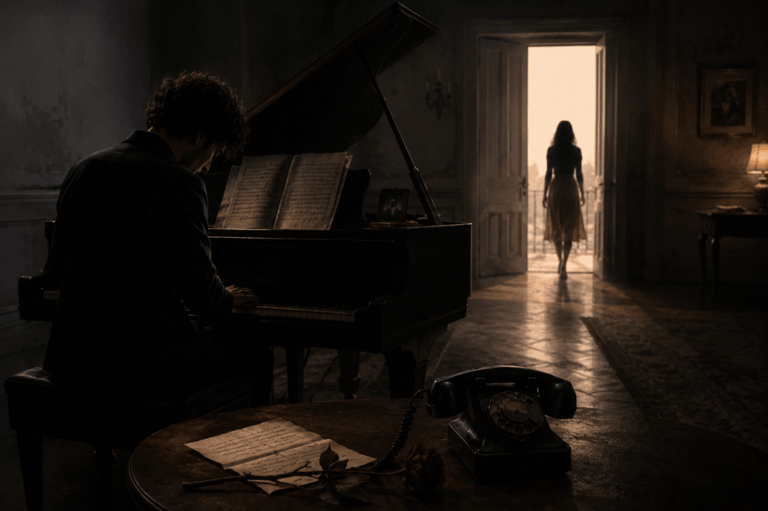
Why does Diana contact the narrator’s partner?
Diana’s most aggressive action is making sure the other woman knows that the narrator is with her.
This changes the encounter from private temptation into deliberate sabotage.
She does not merely want the performer’s attention. She appears to want proof that she can replace, embarrass or emotionally wound the person waiting for him.
The phone call can be interpreted as:
- A demand that he choose between them
- An attempt to destroy his existing relationship
- Evidence that Diana wants control rather than affection
- A way to make the temporary encounter feel permanent
- Punishment for the narrator’s effort to resist her
It also removes his ability to hide.
Before the call, he could imagine returning home and pretending nothing happened. Once Diana involves his partner, the secret becomes much harder to preserve.
Does the narrator cheat?
The song leaves the final physical details partly unstated, but the emotional boundary has already become dangerously unclear.
He remains in Diana’s presence, responds to her attention and allows the situation to reach a point where his partner is contacted.
Even if listeners interpret him as resisting the final act, he has already failed to leave early enough to protect the relationship.
This is one of the song’s most important ideas.
Infidelity rarely begins only at the final moment. It can develop through smaller decisions:
- Continuing a flirtation
- Hiding an interaction
- Enjoying attention while pretending it is harmless
- Remaining in a situation after recognizing its purpose
- Creating emotional distance from a partner
- Blaming temptation instead of setting a boundary
The narrator wants credit for understanding Diana’s game, but awareness without action offers little protection.
Is Diana the villain?
Within the narrator’s version of the story, yes.
She is presented as calculating, persistent and willing to hurt another woman.
However, the narrator may not be completely reliable.
He benefits from describing Diana as overwhelmingly seductive because it reduces his personal responsibility. If she is a powerful manipulator, he can portray himself as the target of her strategy rather than an active participant.
The song can therefore be heard in two ways.
Diana as a dangerous manipulator
She deliberately targets famous men, creates false intimacy and destroys relationships for excitement or status.
Diana as the narrator’s excuse
He is strongly attracted to her but needs to blame someone else for the choices he is considering.
Both interpretations can exist together.
Diana may behave manipulatively, while the narrator may still be responsible for remaining.
What does the song say about fame?
“Dirty Diana” presents fame as an environment where motives become difficult to judge.
A celebrity receives extraordinary attention, but that attention may not be connected to the private person underneath the public image.
The performer may wonder:
- Does this person like me or my name?
- Would she approach me without the stage?
- Can I trust someone who entered through celebrity access?
- Is this relationship real or temporary?
- Does admiration become intimacy too quickly?
- Am I being desired as a person or collected as an experience?
Fame also creates opportunities unavailable to most people.
The narrator is constantly exposed to attention and temptation because of his career. That does not remove responsibility, but it increases the number of situations requiring clear boundaries.
The song reveals the darker side of being wanted by strangers.
Constant desire can feel flattering while making genuine affection harder to identify.
Is “Dirty Diana” a song about groupies?
Yes, according to Jackson’s explanation.
However, the song uses the groupie figure to explore a larger psychological conflict.
Diana is not only a person waiting backstage. She represents every temptation that becomes more powerful because someone believes they can control it.
The song asks what happens when:
- Admiration becomes entitlement
- The performer becomes emotionally isolated
- A stranger offers immediate comfort
- Loyalty competes with ego
- Fame creates the illusion that ordinary rules no longer apply
The groupie setting gives the story a dramatic world of concerts, dressing rooms and late-night encounters, but the emotional pattern can occur outside the music industry.
Anyone can recognize the temptation to accept attention that threatens an existing commitment.
Why does the song sound so aggressive?
The music transforms temptation into a physical confrontation.
Instead of using a smooth romantic arrangement, “Dirty Diana” is built around heavy drums, distorted guitar and an increasingly intense vocal performance.
The sound suggests danger rather than affection.
The production creates several effects:
The slow rhythm builds pressure
The song does not rush. Its heavy pace makes the encounter feel unavoidable.
The guitar adds danger
The distorted sound gives Diana’s presence a threatening, almost cinematic quality.
Jackson’s voice becomes increasingly strained
His performance moves from warning and resistance toward emotional loss of control.
The arrangement continues expanding
Each section increases the tension, reflecting how difficult it becomes for the narrator to leave.
The song’s rock sound separates it from much of Jackson’s dance-oriented material while continuing the harder style heard in “Beat It.”
Who plays guitar on “Dirty Diana”?
Billy Idol guitarist Steve Stevens performs the lead-guitar work.
His playing provides both the screaming effects surrounding the track and its climactic solo. Stevens also appears in the official short film.
He later recalled that Jackson and Quincy Jones gave him considerable creative freedom while remaining focused on the rhythm and overall emotional direction of the recording. (Michael Jackson World Network)
The guitar does not function as decoration.
It becomes another character in the encounter.
Its sounds resemble warning signals, emotional pressure and the uncontrolled energy the narrator is trying to resist.
Who wrote “Dirty Diana”?
Michael Jackson wrote and composed the song.
He co-produced it with Quincy Jones, continuing the creative partnership behind the albums Off the Wall, Thriller and Bad.
The song demonstrates Jackson’s ability to write from inside a dramatic character.
Although the story is connected to experiences surrounding performers, it is structured like a short psychological thriller.
The listener enters after Diana has already approached the narrator. There is little introduction, and the tension begins immediately.
Which album is “Dirty Diana” on?
“Dirty Diana” is the ninth track on Michael Jackson’s 1987 album Bad.
The official Bad album page places it between “I Just Can’t Stop Loving You” and “Smooth Criminal.”
That position is notable because the surrounding songs present very different forms of intimacy.
“I Just Can’t Stop Loving You” expresses devotion.
“Dirty Diana” presents attraction as danger.
“Smooth Criminal” moves into a violent and theatrical narrative.
The album repeatedly shifts between romance, vulnerability, power and threat, showing the range Jackson was trying to establish after Thriller.
How successful was “Dirty Diana”?
“Dirty Diana” became the fifth consecutive No. 1 single from Bad on the Billboard Hot 100.
The achievement made Bad the first album to produce five consecutive chart-topping singles in the United States. The other No. 1 songs were “I Just Can’t Stop Loving You,” “Bad,” “The Way You Make Me Feel” and “Man in the Mirror.” (Recording Academy’s Michael Jackson profile)
In the United Kingdom, “Dirty Diana” reached No. 4 and remained in the Top 40 for nine weeks during its original 1988 run. Its complete performance is available through the Official Charts archive.
Its success showed that audiences accepted Jackson not only as a pop and R&B performer but also as a convincing rock vocalist.
What does the music video mean?
The official short film presents “Dirty Diana” as an intense live performance.
Jackson sings before a crowd while Steve Stevens plays guitar. Between the concert images, a mysterious woman approaches in darkness.
The two visual worlds gradually move toward each other:
- The stage represents public control.
- The woman represents private temptation.
- The crowd sees the powerful entertainer.
- The final encounter reveals the vulnerable person after the performance.
Onstage, Jackson controls every movement and commands thousands of people.
Outside the performance, he is no longer completely in control.
That contrast reflects the song’s central conflict.
Fame gives the narrator power over an audience, yet it also places him in situations where another person can use that fame against him.
The official YouTube description identifies the film as the fourth of nine short films created for Bad and notes that it won the Viewers’ Choice No. 1 Video honor at the 1989 World Music Awards.
Why does the video look like a concert?
The concert format makes the attraction inseparable from celebrity.
Diana is not approaching an ordinary man in an ordinary setting. She is approaching someone surrounded by lights, applause and public desire.
The video shows how performance changes perception.
From the audience, the star looks powerful and unreachable.
Backstage, that same person may be:
- Exhausted
- Lonely
- Emotionally vulnerable
- Separated from loved ones
- Surrounded by strangers
- Flattered by personal attention
The concert also allows Jackson’s physical performance to reflect the narrator’s internal struggle. His movements become sharper and more desperate as the song grows.
Why is Diana mostly hidden?
Keeping Diana mysterious prevents the audience from knowing her fully.
She becomes a silhouette, movement and approaching danger rather than a developed individual.
This supports the narrator’s interpretation of her as a symbol.
It also means viewers cannot easily judge whether his description is fair.
The audience sees the woman mainly through his fear and attraction.
Her limited identity makes the story feel like a nightmare in which one figure contains every possible consequence of one bad decision.
Why does the final car scene matter?
At the end of the video, the performer leaves the stage and finds Diana waiting for him.
The scene suggests that the temptation has survived every attempt at resistance.
He may have completed the concert, but the real decision still waits outside.
The car represents a private space beyond the audience’s view.
If he enters, the public star disappears and the private consequences begin.
The ending does not need to show everything that follows.
Its power comes from the realization that Diana has successfully placed herself at the exact point where he must choose.
Why does Jackson’s vocal sound increasingly desperate?
Jackson performs the song as though the narrator’s emotional control is breaking down.
Early in the recording, he sounds defensive. He believes he understands Diana and can send her away.
As the arrangement grows, his voice includes more cries, roughness and repeated warnings.
The performance reveals what the words try to hide.
He is not calm.
He is frightened by how strongly he is responding.
His vocal intensity can express:
- Attraction
- Anger
- Shame
- Fear of betrayal
- Frustration with Diana
- Frustration with himself
- The realization that resistance may be failing
The final repetitions sound less like instructions to Diana and more like desperate instructions to himself.
Is “Dirty Diana” misogynistic?
The song can be criticized for using a familiar stereotype in which a sexually confident woman becomes the source of male moral danger.
Diana is given little interior life. Her sexuality is treated as manipulative, while the male narrator’s desire is framed as something she causes.
That structure can shift responsibility away from him.
However, the song also exposes his weakness.
He recognizes the pattern, knows he has a partner and still remains vulnerable to Diana’s attention. His repeated warnings do not make him appear fully innocent.
A balanced interpretation can acknowledge both ideas:
- Diana is written as a threatening and one-dimensional seductress.
- The narrator’s attempt to blame her reveals his own failure to take responsibility.
The tension between these readings has helped the song remain open to discussion.
Is “Dirty Diana” similar to “Billie Jean”?
Both songs feature a woman whose presence threatens the narrator’s private life and public identity.
However, their conflicts are different.
“Billie Jean” focuses on disputed responsibility, accusation and paternity.
“Dirty Diana” focuses on temptation and possible infidelity.
Billie Jean claims a lasting connection and threatens the narrator through public consequences.
Diana offers an immediate encounter and threatens him through desire.
In both songs, the male narrator feels pursued and trapped. In both, listeners must decide how reliable his version of events actually is.
Why does the song remain popular?
“Dirty Diana” combines a simple story with intense psychological conflict.
Listeners do not need to be famous musicians to recognize its themes.
The song speaks to anyone who has:
- Received attention at the wrong time
- Been tempted to betray a commitment
- Distrusted another person’s motives
- Enjoyed attention while pretending to resist it
- Blamed temptation instead of leaving
- Discovered that desire can overpower good judgment
- Confused being wanted with being loved
The rock production also gives the song a physical force that has aged differently from many highly electronic recordings of the same period.
Its central guitar sound, dramatic vocal and live-performance imagery continue to feel immediate.
Is the narrator afraid of Diana or himself?
He is afraid of both.
Diana represents an external threat. She is persistent, strategic and willing to involve his partner.
But the deeper threat comes from inside the narrator.
If he had no interest in Diana, her strategy would fail.
His fear is that part of him wants the exact situation he publicly rejects.
He may be afraid that:
- Fame has changed his values.
- His loyalty is weaker than he believed.
- He enjoys dangerous attention.
- He will sacrifice a real relationship for a temporary experience.
- Diana understands his desires better than he does.
- He will later blame her for a choice he made willingly.
The song’s darkest possibility is not that Diana has irresistible power.
It is that the narrator wants to believe she does.
Final meaning
“Dirty Diana” is about a famous performer facing a seductive and potentially destructive encounter while away from the person who trusts him.
Diana represents the groupie culture Jackson observed around musicians and concerts. She is attracted to performers, understands their vulnerabilities and uses desire to gain access and control.
The narrator recognizes the pattern but continues engaging with her.
That contradiction is the heart of the song.
He portrays Diana as the danger, yet his own ego, loneliness and attraction keep him in the situation. Calling her manipulative may be accurate, but it also gives him a convenient explanation for behavior he has the power to stop.
The phone call to his partner transforms private temptation into direct betrayal. The encounter can no longer remain a secret fantasy without consequences.
The heavy guitar, slow rhythm and increasingly desperate vocal turn the story into a psychological battle. The official video extends that battle by contrasting Jackson’s control onstage with his vulnerability after the performance.
“Dirty Diana” is not about Princess Diana or Diana Ross.
It is about the dangerous side of being desired—and the uncomfortable truth that recognizing temptation does not remove responsibility for giving in to it.