
“Army Dreamers” Lyrics Meaning: Kate Bush’s Song About a Mother Mourning Her Soldier Son
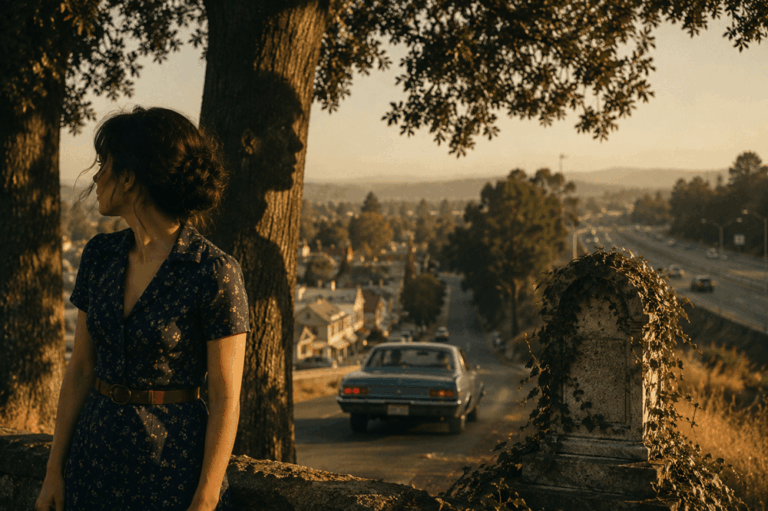
Kate Bush’s “Army Dreamers” is about a mother receiving the body of her young son after he dies while serving in the military.
As she prepares for his funeral, she imagines the life he might have lived. He could have become a musician, entered politics or raised a family. Instead, limited money, limited education and limited opportunities pushed him toward an occupation that ended his life before he reached adulthood.
The song’s central meaning is:
War does not only take soldiers’ lives; it erases every future they might have had and leaves their families wondering whether the tragedy could have been prevented.
Bush does not present the son as a fearless warrior who knowingly sacrificed himself in battle. He is an inexperienced young man who enters a dangerous institution because he does not appear to have many other choices.
That distinction makes “Army Dreamers” more than a general anti-war song. It is also about poverty, education and the social conditions that make military service seem like the only available future.
Listeners can hear the complete recording through Kate Bush’s official “Army Dreamers” music video. The song appears on her 1980 album Never for Ever.
What is “Army Dreamers” about?
“Army Dreamers” follows a grieving mother waiting for her soldier son to be brought home.
This is not a joyful military homecoming. He returns in a coffin, carried by uniformed men.
The mother sees the ceremony around him:
- Flowers
- Military uniforms
- Medals and ribbons
- Formal transportation
- Public language about heroism
None of these symbols comforts her.
To the military, her son may be another fallen serviceman receiving the appropriate honors. To her, he remains a child whose life ended before he had the opportunity to become an adult.
Bush explained that the song concerns a mother who loses her son overseas during a military accident rather than in combat. The mother questions whether she should have guided him toward a different life.
The song therefore concentrates less on the battlefield than on the people left behind.
Its true setting is the mother’s grief.
What does “Army Dreamers” mean?
The title refers to young people who enter the military while still carrying ordinary dreams.
They may wear uniforms, follow orders and receive military titles, but they are also people who once imagined careers, relationships and families beyond the army.
The word “dreamers” can be understood in several ways.
They dream about a better future
The son may have joined because military service appeared to offer employment, identity or a way out of a restricted life.
Their families dream on their behalf
His mother imagines all the things he could have become if circumstances had been different.
Military glory is itself a dream
The public image of discipline, honor and heroism can hide the danger, boredom and vulnerability experienced by real recruits.
Death traps everyone inside an unreal future
After his death, the son’s possibilities can exist only in imagination.
The title is compassionate rather than mocking.
Bush is not criticizing young soldiers for having dreams. She is mourning the fact that those dreams are so easily consumed by institutions larger than they are.
Why does the song focus on the mother?
Bush tells the story through someone who experiences military loss without controlling military decisions.
The mother did not plan the operation, issue commands or create the social conditions surrounding her son. Yet she feels personally responsible for failing to protect him.
Her grief creates impossible questions:
- Should she have encouraged a different career?
- Should she have found money for his interests?
- Should she have pushed him to remain in school?
- Should she have recognized that he was unsuitable for military life?
- Could any parent truly have stopped what happened?
These questions do not necessarily mean she actually caused his death.
Grieving people often search backward for a moment when the outcome might have changed. The mind invents alternative decisions because accepting complete powerlessness can feel unbearable.
Bush described the character as a hardworking, ordinary mother filled with remorse but forced to continue living after her loss.
Her guilt is therefore emotional rather than logical.
She could not predict everything that would happen, but motherhood makes her feel she should have been able to.
Why does she imagine him as a musician, politician and father?
Each imagined future represents something death has taken from him.
The musician represents talent and self-expression
The mother thinks he might have become a successful performer, but the family apparently lacked the money to support that possibility.
The problem is not necessarily that he had no musical ability. He may never have received the instrument, training or time required to discover whether that ability existed.
The politician represents education and influence
Political life requires knowledge, confidence and access to institutions. The son did not receive the education that might have opened that path.
Again, the song does not say he was incapable.
It says the opportunity was unavailable.
The father represents ordinary adulthood
Becoming a parent is not a glamorous fantasy. It is a normal stage of life.
That makes it the most painful possibility.
The mother is not only mourning extraordinary achievements. She is mourning birthdays, relationships, children and everyday experiences her son will never have.
The three futures widen the loss.
He might have become famous, powerful or simply older.
He is denied all three.
Is the song blaming the army?
“Army Dreamers” criticizes the waste surrounding military death, but Bush did not describe it as a simple attack on every person who joins the armed forces.
Her concern was that some young people enter because poor education and lack of opportunity leave them with few alternatives. She suggested that military life may suit some people, while others become trapped in it because they do not know what else they can do.
That distinction is important.
The song does not portray the son as foolish, violent or morally responsible for his fate. It also does not spend much time condemning an individual commander or government.
Instead, it questions the system surrounding him.
A young person with:
- Little money
- Limited education
- Few career options
- No clear direction
- A desire for identity or respect
may see the military as a practical solution.
Once he enters, however, the risks become real.
The song asks whether society has truly given such a person a choice—or merely presented one available door and called the decision voluntary.
Did the soldier die in battle?
Bush said the young man did not die in combat. He died in an accident connected to military service or training.
That detail makes the loss feel especially pointless.
The son does not die while completing a heroic mission that might help the mother create meaning around his sacrifice. He dies before the imagined glory of military service can even begin.
Military training is intended to prepare people to survive danger. In this story, preparation itself becomes fatal.
The accident also exposes the distance between public ceremony and private reality.
The funeral may include uniforms, flowers and official honors, but none can change the fact that an inexperienced young person died unnecessarily.
The mother does not see a completed heroic destiny.
She sees a life interrupted before it found its purpose.
What does B.F.P.O. mean?
B.F.P.O. stands for British Forces Post Office.
It is the postal system used to send mail and parcels to British service personnel and eligible families around the world.
In the song, the abbreviation makes the son sound as though he is still part of military administration even while his body is being returned.
He comes home through a system of codes, uniforms and official procedures.
That language is emotionally cold.
His mother thinks of him as her child, but the institution processes him as a member of the armed forces.
The contrast between bureaucratic initials and intimate grief is deliberate. It shows how a person can have two identities at once:
- To the army, he is a serviceman.
- To his mother, he is still her little boy.
The military identity ends with his service.
The maternal identity does not end with his death.
What do the flowers, ribbons and uniforms symbolize?
The funeral imagery represents the attempt to turn death into honor.
Flowers express mourning. Uniforms communicate discipline and respect. Ribbons and military decorations suggest achievement.
Yet the mother sees how little these symbols can accomplish.
A medal cannot restore the future her son lost.
A formal ceremony cannot answer whether he should have joined.
A heroic label cannot transform an avoidable death into a full life.
The song does not necessarily say that military honors are meaningless to every family. It shows that they are inadequate for this mother.
She would exchange every ribbon for another ordinary year with her son.
The contrast between decorations and death also challenges the romantic appearance of military culture. Uniforms and medals may look impressive from a distance, but the person wearing them remains physically vulnerable.
Once he is gone, the decorations begin to resemble costume accessories placed around an absence.
What does the “tin box” represent?
The metal container is generally understood as an image of the son’s coffin.
Calling it a box removes the dignity and comforting language commonly used around funerals. It makes the object feel small, cold and industrial.
That description reflects the mother’s shock.
The ceremony may present her son as a hero, but she sees the physical reality: the child she raised has been returned inside a container.
Metal also belongs to the world that killed him.
It suggests:
- Weapons
- Machinery
- Vehicles
- Military equipment
- Institutional efficiency
The son entered a system built from uniforms, ranks and metal objects. He is eventually returned through that same system.
The image is not graphic, but it is devastating because it reduces a life full of possible futures to one final object.
Why does the mother compare him to something defenseless?
The song uses an image of a vulnerable farm animal facing a predator.
Its meaning is simple: the son was never equipped to win.
He may have entered the military believing courage, confidence or personal pride would protect him. In reality, determination cannot overcome every imbalance of experience, power or danger.
The comparison also makes him appear young and innocent.
He is not described as a powerful warrior confronting an equal opponent. He is someone placed in a situation whose risks he did not fully understand.
This weakens the mythology of the heroic soldier.
Heroism normally suggests choice and mastery. The son appears to have neither.
His death is not proof that he lacked courage.
It is proof that courage alone cannot make an unfair situation survivable.
Why does such a sad song sound gentle?
“Army Dreamers” uses a light, swaying waltz rhythm rather than an aggressive military march.
The music feels delicate, almost like a folk song or nursery tune. That softness makes the subject more disturbing.
A louder arrangement might tell the listener exactly when to feel angry. Bush instead creates a beautiful surface and allows the horror to emerge gradually underneath it.
The waltz also suggests circular movement.
The mother repeatedly returns to the same impossible questions about what her son could have become. Her thoughts move through alternative lives but always arrive back at the funeral.
The traditional sound supports the feeling that this is not one isolated tragedy. It resembles a story passed through generations by families who have repeatedly lost children to war.
The official music-video description identifies the track’s waltz tempo as a departure from Bush’s earlier work.
What is the clicking sound in the recording?
The sharp mechanical sound heard throughout “Army Dreamers” comes from the action of a rifle being cocked, used rhythmically as percussion.
Bush’s official album page notes that she had begun working with the Fairlight sampling system on Never for Ever and used the rifle sound as part of the track’s rhythm.
This detail changes the gentle arrangement.
The song may sway like a lullaby, but a weapon remains inside its pulse.
The listener repeatedly hears military violence without being given a dramatic explosion. The quiet click suggests preparation—the moment before a shot rather than the shot itself.
That creates tension because it resembles danger waiting to happen.
The sound also links music and machinery.
Bush transforms a weapon into an instrument, but the original meaning of the noise cannot disappear completely. Every click reminds the listener that the mother’s tender memories exist inside a military world.
Why does Kate Bush use an Irish-influenced voice?
Bush adopted an Irish vocal character because she wanted the song to feel connected to traditional storytelling.
Her mother was Irish, and Bush associated Irish musical traditions with passing stories through song. Contemporary interviews describe the accent as an important part of the song’s folk-like treatment.
The choice gives the mother a distinct personality.
She does not sound like an abstract political narrator delivering an argument about military policy. She sounds like a particular woman from a recognizable cultural and family world.
That intimacy strengthens the song.
Instead of saying that war wastes young lives in general, Bush allows one mother to show what that waste feels like.
The traditional vocal style also connects a modern military death with older laments about sons leaving home and failing to return.
Technology changes.
Uniforms change.
The mother’s grief does not.
What does the music video add?
The official video places Bush and a group of soldiers in a wooded combat environment.
Bush first holds a white-haired child. As the video continues, the child becomes a young soldier, compressing an entire life into a brief transformation.
She repeatedly tries to reach him, but he moves into a world of weapons, uniforms and explosions.
The visual idea makes the mother’s perspective unmistakable.
A military recruit may look like an adult to the institution, but a parent can still see the child who existed before the uniform.
Bush appears in camouflage herself, suggesting that the mother has been pulled into the military nightmare even though she did not enlist.
She cannot remain outside her son’s experience. His danger becomes part of her emotional life, and his death destroys the boundary between the battlefield and home.
The official video identifies “Army Dreamers” as the third and final single from Never for Ever, released on September 22, 1980.
Who wrote and produced “Army Dreamers”?
Kate Bush wrote the song and co-produced Never for Ever with Jon Kelly.
Bush has said that “Army Dreamers” was the first song she wrote inside a recording studio. The album was recorded at Abbey Road and marked an important step toward the greater production control she would exercise throughout her career.
Never for Ever was Bush’s third studio album and her first UK No. 1 album. It was also the first album by a British female solo artist to top the UK chart.
“Army Dreamers” became the album’s third and final single.
It reached No. 16 on the UK Official Singles Chart and remained in the Top 100 for nine weeks.
Its chart position was respectable, but its lasting importance comes from how quietly it delivers a severe political and emotional argument.
Why was the song restricted during the Gulf War?
“Army Dreamers” was among the recordings considered unsuitable for BBC airplay during the 1991 Gulf War.
The restriction reflected concern that songs referring to war, armies, death or related subjects might seem insensitive during active military operations.
The decision is revealing.
The song does not celebrate violence or mock soldiers. It mourns a serviceman and the family damaged by his death.
Yet that very perspective may have made it uncomfortable.
“Army Dreamers” directs attention away from military strategy and toward the preventable loss of a young person. During wartime, such a message can challenge the cleaner public language of duty, victory and national purpose.
The song does not need to shout in order to be politically powerful.
Its grieving mother asks a question that official language cannot easily answer:
Why was this the only future available to him?
Final meaning
“Army Dreamers” is about a mother mourning a young son who dies during military service before he has the opportunity to build an adult life.
As his body is returned, she imagines the person he might have become.
He could have made music, influenced public life or raised children of his own. Those possibilities were not lost because he lacked value. They were limited by money, education and opportunity before military danger removed them completely.
The mother blames herself because grief makes her imagine that one different decision could have saved him.
Bush’s larger argument is social.
When young people are offered few realistic paths, joining the military may look like a free choice even when it is shaped by deprivation. Society then praises them with uniforms, medals and heroic language while failing to acknowledge how little opportunity existed before they enlisted.
The gentle waltz makes the message more painful. Folk instruments and Bush’s tender delivery surround a rhythm containing the mechanical sound of a rifle.
Beauty and violence occupy the same recording.
That contrast captures the tragedy at the center of “Army Dreamers.”
The son is remembered as a soldier, but the mother remembers everything he never had time to become.