
Katie Sky’s “Monsters” Meaning: Support in the Dark
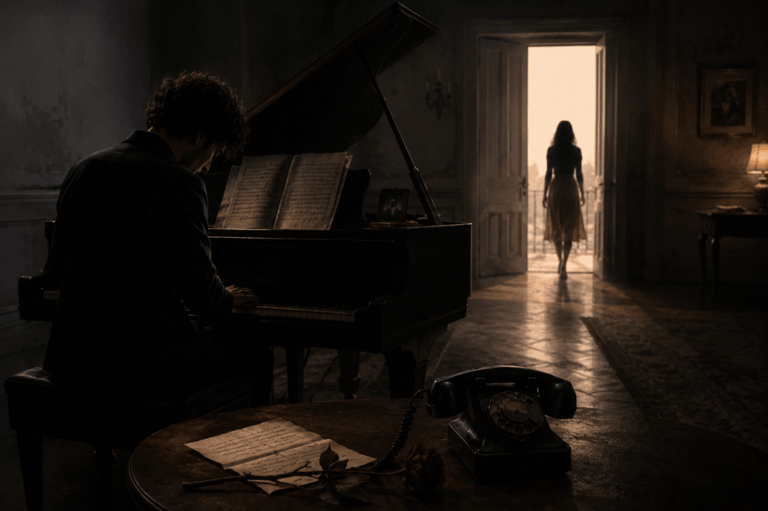
Katie Sky’s “Monsters” is about recognizing pain that another person is trying to hide and promising not to withdraw when that pain becomes visible.
The person at the center of the song appears guarded and unable to see much hope around them. Rather than treating that withdrawal as coldness, the narrator recognizes that fears and difficult memories may be shaping how the person responds to the world.
Her promise is comforting, but it is not best understood as a claim that one person can magically remove another’s struggles. “Monsters” is a song about dependable support: listening without judgment, remaining emotionally available, and making it safer for someone to stop facing the darkness alone.
Listen to Katie Sky’s “Monsters”
I could not verify a current authorized page displaying the complete lyrics to Katie Sky’s solo recording. The available Shazam lyrics page belongs to the Timeflies version, which contains different verses and should not be treated as the complete text of Katie Sky’s solo release.
You can hear the original solo recording through these official and authorized destinations:
- Listen to “Monsters” on Apple Music
- Play Katie Sky’s official audio on YouTube
- Explore the original single through LAB Records
- Watch the separate Timeflies version featuring Katie Sky
Apple Music lists the solo recording at 3:37, while LAB Records dates the single to May 11, 2014. Katie Sky’s official upload describes it as her complete version of the Timeflies song on which she had previously appeared. (LAB Records)
“Monsters” at a glance
- Artist: Katie Sky
- Release: “Monsters” single
- Released: May 11, 2014
- Duration: 3 minutes, 37 seconds
- Label: LAB Records
- Official songwriting credits: Catherine Cheadle, The Tune Park, Mads Vathne Lervik, and Bjarte Ludvigsen
The release metadata supplied with the official distribution upload lists those four writing credits. It does not list Timeflies members Rob Resnick or Caleb Shapiro as writers of Katie Sky’s solo recording. (YouTube)
What is Katie Sky’s “Monsters” about?
“Monsters” is about noticing that someone is struggling internally and offering them a steady, nonjudgmental place of support.
The monsters are not literal creatures. They represent fears, painful memories, insecurity, loneliness, shame, or other burdens that are difficult to discuss openly.
The narrator responds in three ways:
- She recognizes that the person’s withdrawal may be hiding pain.
- She invites them to speak without forcing immediate disclosure.
- She promises that their vulnerability will not make her leave.
The song is therefore less about defeating imaginary enemies than about making hidden pain safe enough to share.
Its central message is not that affection can solve every problem. It is that isolation does not have to be the only way of coping.
Monsters, memories, and emotional withdrawal
A monster is an effective metaphor for an internal struggle because it feels threatening, difficult to control, and larger when encountered alone.
The plural suggests that the person may not be facing one simple problem. Different fears, memories, and insecurities may be reinforcing one another.
The song leaves those struggles broad enough to include:
- Painful memories
- Fear of judgment
- Shame or self-doubt
- Loneliness
- Grief
- Anxiety about what may happen next
- Thoughts that repeatedly return
It would be too specific to diagnose the person with depression, trauma, or another condition. The lyrics describe emotional distress without defining its medical cause.
Why does the person hide?
Withdrawal may be a form of self-protection.
Someone might stay silent because they fear becoming a burden, do not expect to be understood, or worry that revealing the truth will lead to judgment or rejection.
The song also suggests that earlier experiences are affecting how the person sees the present. The world around them may contain beauty or safety, but bad memories make those things difficult to notice.
That does not mean the struggle is imaginary or easily corrected.
The pain may exist internally, but its effect on the person’s experience is real. Past hurt can change how new relationships, neutral situations, and offers of support are interpreted.
Why talking matters
The narrator encourages conversation because speaking can interrupt isolation.
Naming a fear does not automatically remove it, but it allows another person to respond with understanding instead of being left to guess.
The song’s emotional movement is gradual:
- The narrator notices the withdrawal.
- She makes herself available.
- She allows the person time.
- She invites an honest conversation.
- She promises not to disappear when the hidden struggle becomes visible.
The important change is not that the narrator immediately finds a solution. It is that the person may begin to believe honesty will not cost them the relationship.
What does the lighthouse represent?
The lighthouse is the song’s clearest symbol of dependable support.
A lighthouse does not remove the sea, prevent every storm, or steer a ship itself. It remains visible and consistent while the traveler finds a route through dangerous conditions.
The narrator is making a similar promise.
She cannot control the other person’s healing or remove every painful memory. She can remain trustworthy, visible, and emotionally steady while they find their own way forward.
The metaphor therefore presents her as a guide rather than a rescuer.
Her support matters not because she possesses complete control, but because she offers a reliable point of connection when everything else feels uncertain.
Support without trying to become someone’s cure
The chorus uses confident language about confronting the monsters and driving them away.
Emotionally, that confidence communicates courage. The narrator is assuring the person that their pain will not frighten her or make them less worthy of care.
Her promise can reasonably mean:
- You do not have to hide this from me.
- I will listen before judging.
- I will stay present during difficult conversations.
- Your struggle does not make you unlovable.
- I will help you feel less alone.
It should not be interpreted as:
- I alone can cure you.
- Love guarantees that every fear will disappear.
- Your recovery is entirely my responsibility.
- You do not need any support beyond this relationship.
One person can offer meaningful companionship without controlling another person’s recovery.
That distinction makes the song’s message more believable. The narrator does not need to solve everything to make a difference.
Hope without forced positivity
The song points toward light beyond the current darkness, but that hope should not become pressure to recover immediately.
Forced positivity would dismiss the person’s experience by insisting that they simply cheer up or focus on good things.
The narrator’s more compassionate message is:
I understand that you cannot see much hope right now, but I will remain nearby while your view begins to change.
The song’s repeated reassurance matters because consistency may be more useful than increasingly elaborate advice.
Why the support goes both ways
The most important development comes when the song reveals that the struggling person previously supported the narrator.
That detail changes the relationship.
The narrator is not a flawless rescuer speaking down to someone permanently helpless. She is returning care that she once received.
Their relationship is reciprocal:
- Either person can struggle.
- Either person can provide strength.
- Needing help does not make someone permanently weak.
- Support roles can change.
- Care becomes part of an ongoing relationship rather than a one-sided intervention.
The narrator remains present partly because she remembers what it felt like when the other person did the same for her.
This turns “Monsters” from a rescue fantasy into a song about mutual loyalty.
Katie Sky’s solo version and the Timeflies recording
“Monsters” exists in two related but distinct forms.
Katie Sky first appeared on the Timeflies recording. She later released her solo single through LAB Records on May 11, 2014. In her official upload, she described it as her full version of the Timeflies song on which she had featured. (LAB Records)
Katie Sky’s solo recording
The solo version is the subject of this article.
Its verses focus on:
- Hidden emotional distress
- Bad memories
- Trust and conversation
- The lighthouse metaphor
- Patient support
- Care being returned between two people
The Timeflies version
The Timeflies recording contains additional verses and appears separately on the duo’s After Hours release. Apple Music lists it at 3:45, compared with the 3:37 duration of Katie Sky’s solo version. (Apple Music – Web Player)
Those added verses introduce their own narrative material. They should not be blended with Katie Sky’s solo lyrics as though both recordings tell one continuous story.
The shared hook connects the versions, but their complete meanings are not identical.
How the pop arrangement reinforces the promise
Katie Sky’s recording uses a bright, accessible pop arrangement rather than the heavy atmosphere of a dark psychological ballad.
That contrast keeps the song encouraging.
The words acknowledge fear, withdrawal, and painful memories, but the music continues moving through a steady rhythm and a clear melodic hook.
The arrangement supports the meaning by:
- Giving the song forward motion
- Making the promise easy to remember
- Preventing the emotional subject from becoming oppressive
- Allowing Sky’s vocal to sound confident without becoming forceful
- Turning repetition into a sign of reliability
The narrator does not need to keep inventing new promises.
She returns to the same reassurance because dependable support often matters more than dramatic declarations. Like the lighthouse, the chorus remains in the same emotional place each time the person needs it.
Final meaning
Katie Sky’s “Monsters” is about recognizing pain that another person is trying to keep hidden and offering them a steady place of trust.
The monsters represent fears, memories, and insecurities that become more powerful in isolation. The lighthouse represents guidance that remains visible without taking control of another person’s journey.
The song’s most meaningful promise is not that love can magically cure every struggle.
It is that vulnerability will not make the narrator walk away.
Because the support was once given to her, she now returns it. That reciprocity turns “Monsters” into a warm portrait of mutual care rather than a story about one powerful person rescuing someone helpless.