Hong Kong Peak Night View: A Music Lover’s Guide
Hong Kong does not illuminate all at once.
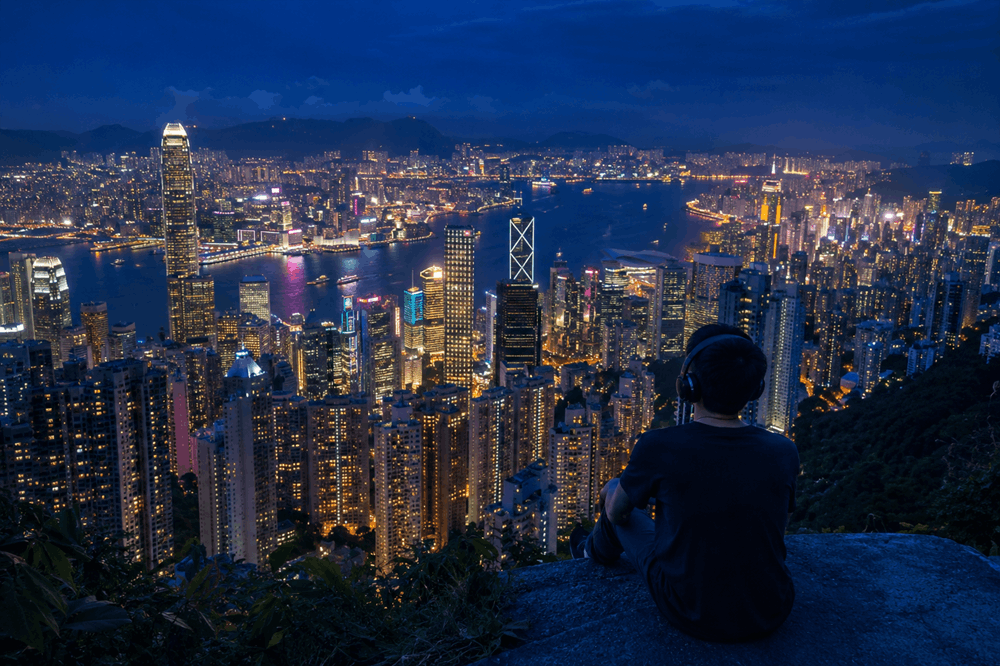
From Victoria Peak, the city changes gradually. Afternoon haze begins to soften, windows switch on across Central and Wan Chai, ferries cross Victoria Harbour, and traffic turns into streams of moving light. By the time the sky is completely dark, individual buildings seem to merge into one vast composition.
That transformation makes the Hong Kong Peak night view more than a photograph. It is an experience shaped by distance, movement, wind, silence and the music you associate with the city.
This guide explains where to see the skyline, when to arrive, how to reach the Peak and which Hong Kong songs can add emotional context to the view.
Best paid viewpoint: Sky Terrace 428
Best free viewpoint: Lugard Road Lookout
Best time: Arrive before sunset and remain through blue hour
Main transport: Peak Tram or Citybus Route 15
Check before leaving: Weather, visibility, operating hours and return transport
What Hong Kong sounds like from above
The skyline looks louder than it sounds.
From the Peak, you can see office towers, roads, ferries, signs and thousands of illuminated windows, yet much of the city’s noise cannot reach you clearly. The immediate soundtrack is often surprisingly restrained:
- Wind moving across the hillside
- Footsteps along the viewing area
- Visitors speaking quietly
- Camera shutters and phone notifications
- Nearby cars and buses
- A distant, indistinct hum from below
At street level, Hong Kong surrounds you with engines, crossing signals, announcements, conversations and music from shops. From the Peak, you can see evidence of all that activity without hearing its individual sources.
The separation creates a reflective feeling. Millions of people appear to be present through the lights below, but their voices and private lives remain beyond reach.
Music can fill some of that distance. A Hong Kong song does not merely provide background sound; it can reconnect the skyline with the personal stories, ambitions and memories hidden within it.
Five Hong Kong songs for the Peak night view
These are editorial recommendations based on how each song’s sound and themes complement the view. They are not officially connected with Victoria Peak.
Keep the volume low enough to remain aware of other visitors, traffic and announcements. Headphones are best used at the main viewing areas rather than while walking along darker hillside paths.
Roman Tam — “獅子山下” (“Below the Lion Rock”)
Listen to “獅子山下” on Apple Music
Originally released as the theme for the television series Below the Lion Rock, Roman Tam’s 1979 recording carries a broad, dignified melody that suits the scale of the city below.
From the Peak, Hong Kong appears unified: roads, buildings and harbour traffic form one connected system. The song encourages a different way of seeing that unity—not as architecture alone, but as the result of people enduring difficulties and building lives beside one another.
My Little Airport — “浪漫九龍塘” (“Romance in Kowloon Tong”)
Listen to the official audio on YouTube
My Little Airport’s understated indie pop offers a useful contrast to the grandeur of the Peak. “浪漫九龍塘” turns a recognizable Hong Kong location into a small, awkward and intensely personal story. The official audio is distributed on YouTube through The Orchard Enterprises.
Across Victoria Harbour, Kowloon can appear distant and abstract. This song brings it back to human scale. Neighbourhoods are not only clusters of buildings; they are places where people meet, hesitate, make mistakes and create private memories.
Eason Chan — “陀飛輪” (“Tourbillon”)
Listen to “陀飛輪” on Apple Music
“陀飛輪” reflects on time, possessions and the cost of pursuing visible signs of success. Apple Music lists it among Eason Chan’s best-known recordings.
That makes it a compelling song for a skyline dominated by commercial towers and expensive real estate. The view can resemble a monument to ambition, while the song invites listeners to ask what remains when years have been exchanged for achievements that cannot stop time.
Beyond — “海闊天空” (“Boundless Oceans, Vast Skies”)
Find “海闊天空” on Beyond’s Apple Music page
Beyond’s “海闊天空” combines rock energy with a powerful sense of openness and determination. Apple Music describes it as one of the band’s defining songs and an unofficial anthem for many Hong Kong listeners.
It works especially well during blue hour, while the harbour and distant hills remain visible. The song’s scale matches the landscape without reducing it to scenery. It adds ideas of freedom, persistence and looking beyond immediate limitations.
Leslie Cheung — “Monica”
Listen to “Monica” on Apple Music
Not every moment at the Peak needs to feel quiet or introspective. Leslie Cheung’s 1984 recording of “Monica” carries the polished energy of an influential era in Hong Kong popular culture.
Play it after full darkness, when the signs, traffic and building lights give the city a more electric character. The song’s momentum captures a Hong Kong that feels stylish, fast-moving and eager to reinvent itself.
For a broader introduction to current releases, Apple Music’s A-List: Cantopop is regularly updated and includes pop, R&B, indie, rock and other contemporary Cantonese styles.
Sky Terrace 428 or Lugard Road?
The two best-known viewing options offer noticeably different experiences. Neither is automatically superior.
Sky Terrace 428
Sky Terrace 428 is the paid observation platform at the top of the Peak Tower. Its name refers to its position 428 metres above sea level, and the operator describes it as Hong Kong’s highest viewing platform.
It is the better choice when you want:
- A high, open observation deck
- Broad panoramic views
- A convenient location beside the Peak Tram terminus
- Nearby restaurants, shops and indoor facilities
- A straightforward first visit
Current official hours are 8:30 a.m. to 10 p.m. daily, effective from May 2026. Ticket products and prices can change, so use the official Peak website rather than relying on an old travel article.
The observation deck can become crowded around sunset. Arriving earlier gives you time to understand the layout and find a position before the most popular viewing period.
Lugard Road Lookout
Lugard Road offers a free and quieter alternative.
The lookout is part of the Peak Circle Walk and provides a bird’s-eye view over the skyline and Victoria Harbour. The Hong Kong Tourism Board places it at 31 Lugard Road; its Chinese-language visitor information says the viewpoint is reached after approximately 20 minutes of walking from the main Peak area.
Lugard Road may suit you better when you prefer:
- A free viewpoint
- A short scenic walk
- Fewer commercial surroundings
- Trees and hillside vegetation framing the city
- A quieter atmosphere for listening and reflection
The path is less controlled than a ticketed observation deck and becomes darker after sunset. Stay on the established route, wear suitable footwear and keep enough phone battery for navigation.
Which viewpoint should you choose?
Choose Sky Terrace 428 for convenience, height and a broad open platform.
Choose Lugard Road for atmosphere, a natural foreground and more distance from the Peak Tower crowds.
You can also combine them. Arrive early, walk toward Lugard Road before sunset, and return to the main Peak area after the skyline reaches full darkness.
The Hong Kong Tourism Board recommends both Lugard Road and Sky Terrace 428 as major places to experience the city from above.
The best time to see the view
Arrive before sunset rather than waiting until the city is fully dark.
Doing so allows you to see three different versions of Hong Kong:
- Daylight, when roads, buildings, harbour traffic and surrounding hills remain visible
- Blue hour, when the sky deepens and artificial lights begin to dominate
- Full night, when windows, roads and signs form the strongest patterns
Blue hour often provides the best balance for photography. The remaining colour in the sky prevents the city from disappearing into a black background, while illuminated buildings are already clearly visible.
The exact sunset time varies throughout the year, so check it on the day of your visit.
Visibility is equally important. Haze, humidity, rain and low cloud can obscure Kowloon and parts of Victoria Harbour. The Hong Kong Observatory’s visibility page provides current readings for locations including Central. These readings offer a useful general indication, although cloud conditions can differ at the higher elevation of the Peak.
A small amount of mist can make the view atmospheric. Heavy cloud may leave the Peak inside the cloud layer, hiding much of the skyline completely.
Taking the Peak Tram
The Peak Tram is the most distinctive way to reach the area. The steep climb turns transportation into part of the experience, with nearby buildings appearing to lean as the funicular ascends the hillside.
The lower terminus is located at 33 Garden Road, Central. Current official information lists:
- Operating hours: 7:30 a.m. to 11 p.m. daily
- Typical frequency: Every 10–15 minutes
- Sky Terrace hours: 8:30 a.m. to 10 p.m. daily
Queues vary by day, season and time. Weekends, public holidays and the period before sunset can be especially busy, so allow more time than the journey itself requires.
Buy tickets through the official Peak website or another clearly authorized seller. The operator has previously warned visitors about phishing websites imitating its ticketing service.
Taking Citybus Route 15
Citybus Route 15 is the main regular public-bus alternative to the tram. It serves the Peak through boarding points in Central, Admiralty and Wan Chai.
The bus may be a good choice when:
- Tram queues are unusually long
- The tram is temporarily unavailable
- You prefer a road journey through hillside neighbourhoods
- Your starting point is closer to a Route 15 stop
Schedules and journey times can change, so use Citybus Peak Explorer for current boarding information and estimated arrival times rather than depending on a timetable reproduced elsewhere.
Before settling in for a long evening, check the final tram and bus options for the day. Sky Terrace may close before the last tram departs, and bus services follow their own schedules.
Photographing the skyline without missing it
The light changes quickly around sunset, making it tempting to take photographs continuously. A few simple choices are usually enough:
- Arrive in time for blue hour.
- Clean the phone or camera lens.
- Lower the exposure slightly to preserve bright building lights.
- Include ferries, roads or harbour reflections to show movement.
- Use a railing or stable surface where permitted.
- Take several photographs, then put the device away.
The final step matters most.
Watch how other visitors react when they first see the skyline. Some immediately lift a phone. Others point out landmarks, stand silently or call someone to share the view. Those responses are also part of the experience.
Music can make the view feel personal, but silence deserves space too. Listen to one or two songs, remove the headphones and hear what remains around you.
More than a postcard view
From Victoria Peak, Hong Kong appears polished and almost abstract. Towers become shapes, roads become lines and thousands of windows form a larger pattern.
Music restores some of what distance removes.
Roman Tam can turn the skyline toward shared experience. My Little Airport can return distant neighbourhoods to the scale of private life. Eason Chan can make the towers feel connected to time and ambition. Beyond adds a sense of openness, while Leslie Cheung captures the city’s bright pop energy.
The view is most rewarding when you hold both perspectives at once.
See Hong Kong as a complete composition, but remember that every visible light belongs to a smaller story taking place below.