London Musicals: A Music Lover’s West End Guide
London’s West End offers far more than one recognizable style of musical theatre. On the same evening, audiences can choose between sweeping orchestral drama, ABBA songs, rapid-fire hip-hop, folk.
That variety is exciting, but it can make choosing a show difficult. The most famous or longest-running musical is not automatically the best one for you. A better starting point is the music you already enjoy.
This guide explains how to choose a London musical by sound, what changes when you hear musical theatre live, and how to plan your visit without turning the experience into an exhausting research project.
London productions, casts and booking periods change regularly. The examples below were playing in London in July 2026, but check the regularly updated Official London Theatre musical listings before arranging a trip. musical by your music taste
Musical theatre is not a single musical genre. It is a way of telling stories through songs, acting, dialogue, movement and design.
A musical can draw from pop, rock, hip-hop, folk, jazz, classical composition or traditional Broadway writing. Begin by asking which kind of music you would willingly hear for two or three hours.
For sweeping melodies and dramatic storytelling
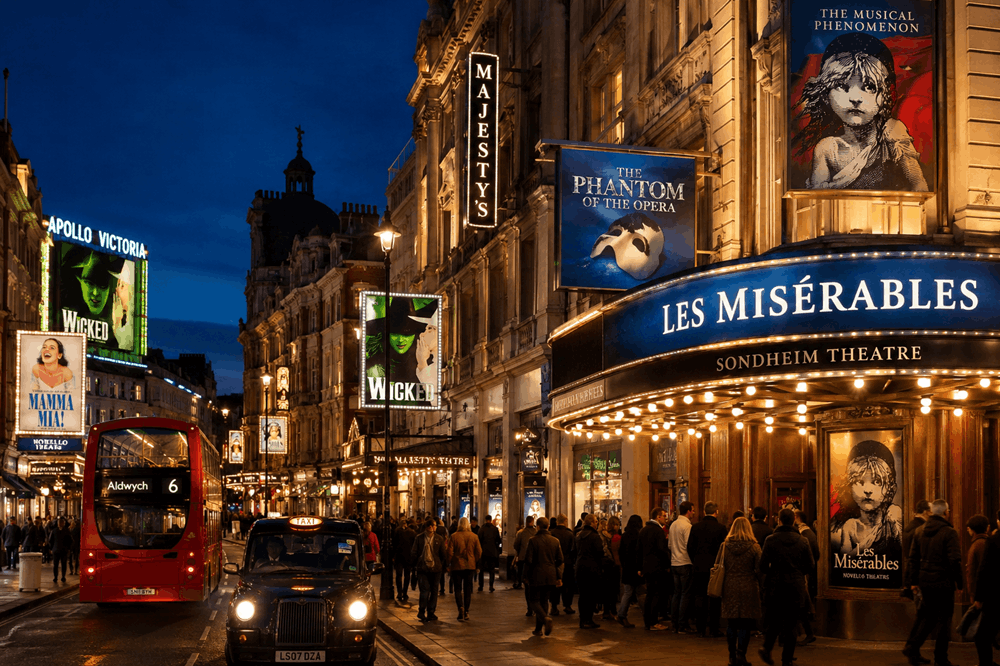
Listeners who enjoy large emotions, recurring musical themes and powerful ensemble singing may be drawn to shows such as Les Misérables and The Phantom of the Opera.
Les Misérables
Les Misérables uses a largely sung-through score to tell a story of injustice, revolution, sacrifice and redemption. Its melodies repeatedly return in altered settings, allowing the audience to hear how characters and circumstances have changed.
The score may suit listeners who enjoy:
- Grand ensemble numbers
- Strong emotional climaxes
- Melodies that return throughout a story
- Historical drama
- Tragic and hopeful themes
The official London production continues at the Sondheim Theatre. f the Opera*
Andrew Lloyd Webber’s The Phantom of the Opera combines romantic ballads, gothic atmosphere, operatic references and large theatrical set pieces.
Its sound is polished and dramatic, with prominent vocal performances and recurring musical ideas linked to characters and relationships. The production is entering its 40th year at His Majesty’s Theatre. are good starting points for people who want music to carry an emotionally intense story. Someone seeking a relaxed pop-concert atmosphere may prefer a different category.
For familiar pop songs and big choruses
A jukebox musical builds its score around songs that were released before the stage story was created.
The familiarity can make this type of show especially accessible to people attending their first musical.
Mamma Mia!
Mamma Mia! creates a fictional romantic comedy around songs by ABBA. Its appeal comes partly from recognition: audiences may already know the melodies, choruses and emotional associations attached to the music.
The London production remains at the Novello Theatre and is currently booking into 2027. ces who enjoy:
- ABBA and classic pop
- Familiar singable choruses
- Romance and comedy
- A celebratory atmosphere
- Songs that work outside the theatre story
A jukebox musical does not simply present a tribute concert. Its challenge is to place existing songs into situations where they reveal character, advance the plot or take on a new meaning.
For original pop and concert-style energy
Not every pop musical is a jukebox musical. Some use original songs written specifically for the stage while borrowing the sound, presentation or energy of contemporary pop concerts.
SIX
SIX retells the experiences of Henry VIII’s six wives through an original pop-influenced score. The production is structured with the pace and direct audience address of a live concert, supported by an onstage band known as the Ladies in Waiting.
The London production is playing at the Vaudeville Theatre. isteners who enjoy:
- Contemporary pop vocals
- Short, energetic songs
- Concert-style staging
- Humour and direct audience interaction
- Historical stories told through modern language
The distinction between SIX and Mamma Mia! is useful. Mamma Mia! places previously released ABBA songs inside a new story. SIX uses an original score written for its historical characters.
For hip-hop, wordplay and contemporary storytelling
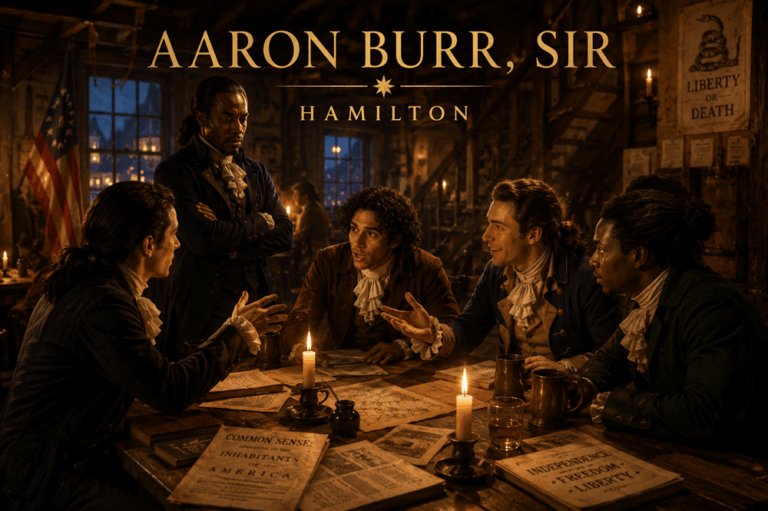
Hamilton
Hamilton uses hip-hop, R&B, jazz and Broadway traditions to dramatize the life of Alexander Hamilton and the political world surrounding the American Revolution.
Its book, music and lyrics were written by Lin-Manuel Miranda, and the London production continues at the Victoria Palace Theatre, with bookings currently available into March 2027. listeners who appreciate:
- Rap and intricate rhyme
- Dense lyrical storytelling
- Motifs that return with altered meanings
- Musical references across genres
- Fast-moving historical drama
Some sections contain many words in a short time. Listeners who find rapid English lyrics difficult may benefit from hearing one or two songs beforehand, though reading a complete plot summary is unnecessary.
For folk, blues and jazz textures
Hadestown
Written by singer-songwriter Anaïs Mitchell, Hadestown retells the myths of Orpheus and Eurydice and Hades and Persephone.
Its score draws on folk, blues and New Orleans-influenced sounds rather than the glossy orchestration some people associate with traditional musical theatre. The London production is playing at the Lyric Theatre. ers who enjoy:
- Folk storytelling
- Blues and jazz textures
- Mythology
- Singer-songwriter traditions
- Music with an earthy, intimate quality
An unusual option for further listening is Hadestown – Live From London, an official album recorded during a performance at the Lyric Theatre. It provides more of the production’s live atmosphere than a conventional studio cast recording, although it still cannot reproduce the complete visual experience. d visual spectacle
A family-oriented production does not have to mean simple music. Several long-running London musicals combine accessible storytelling with sophisticated songwriting, orchestration and stage design.
The Lion King
The Lion King combines familiar Elton John and Tim Rice songs with choral, rhythmic and musical influences that extend beyond the original animated film.
Its masks, puppetry, movement and ensemble singing make it particularly suitable for audiences who want music and visual design to feel inseparable. The London production remains at the Lyceum Theatre. usical*
Matilda features music and lyrics by Tim Minchin. Its score is known for witty language, rhythmic wordplay and songs that reflect the exaggerated personalities of Roald Dahl’s characters.
The production continues at the Cambridge Theatre. ked* offers large vocal set pieces, contemporary Broadway ballads and a fantasy story about the relationship between the future witches of Oz.
It remains at the Apollo Victoria Theatre, with tickets currently available into 2027. children, check the production’s official age recommendation, running time and content guidance. A visually impressive show may still contain loud effects, dark scenes or a length that does not suit every young audience member.
Why musicals sound different live
A cast recording can introduce the score, but it cannot completely reproduce what happens in the theatre.
On an album, a song exists mainly as recorded music. Onstage, it is also a dramatic action. A character may be making a decision, concealing something, challenging another person or admitting a feeling they could not express through ordinary speech.
The meaning comes from several elements working together:
- Vocal phrasing and physical acting
- Lighting, costume and scenic design
- Choreography and movement
- The placement of performers onstage
- The response of the audience
- The dramatic events surrounding the song
Where a live orchestra or band is used, the conductor and musicians also help shape the pace and energy of the performance. Other productions may use smaller ensembles, electronic instruments, actor-musicians or recorded elements.
A polished cast album may sound cleaner, but live theatre adds tension. A performer must sustain the role, respond to the other actors and communicate the song to the room in that particular moment.
Should you listen to the songs before attending?
Both approaches can work.
Listening beforehand may help when:
- English is not your first language.
- The lyrics are fast or densely written.
- The story contains several characters or timelines.
- You enjoy recognizing returning melodies.
- Familiarity helps you concentrate on the staging.
Going in without listening may be better when:
- You want the songs to arrive within their intended dramatic context.
- The production depends on musical or narrative surprises.
- You do not want to compare the current cast with a recording.
- Discovering unfamiliar music is part of the appeal.
A balanced approach is to read the official description and hear one or two songs without studying the complete plot. That gives you a sense of the musical style while leaving most of the story intact.
Why a cast recording is not the complete musical
Cast albums are created for repeat listening. They are not always exact documents of the stage production.
A recording may omit:
- Spoken dialogue
- Dance sequences
- Short reprises
- Scene-change music
- Audience interaction
- Transitional passages
The album may also feature a different cast from the one currently performing in London. Productions sometimes change arrangements, lyrics, keys or scenes after a recording is made.
This does not make cast albums less valuable. They allow listeners to revisit melodies, study lyrics and notice musical connections they may have missed in the theatre. They are best understood as companions to the production rather than complete replacements for it.
How to choose between several shows
Once you have identified a musical style you enjoy, consider four practical questions.
Does the story appeal to you?
A well-reviewed tragedy may be the wrong choice when you want a cheerful evening. A light jukebox musical may disappoint someone looking for a complex dramatic experience.
Read the official premise, but avoid a full synopsis when you want to preserve surprises.
How long is the production?
Check the running time and whether there is an interval. This matters when arranging dinner, transportation or a train after the show.
Is the content appropriate for your group?
Look for official information about age restrictions, strong language, violence, flashing lights, haze and loud effects. Each production and theatre sets its own policies.
Does the current cast matter to you?
The performers on a famous cast recording may no longer be in the London production. Check the official cast page when attending for a particular actor, but remember that appearances can change because of illness, holidays or scheduling.
Buying London musical tickets safely
Start with the production’s official website, the theatre’s box office or Official London Theatre.
Official London Theatre is the only ticketing website run by the Society of London Theatre and operates as a not-for-profit ticket-buying option. It also maintains current show listings, venue information and a page for same-day and discounted tickets. according to the show, performance date, demand and seat location. Avoid building plans around a price seen in an old article or social-media post.
Before paying, confirm:
- The production and theatre
- The performance date and time
- The exact seat location
- Any restricted-view warning
- Booking or transaction fees
- Exchange and refund conditions
Be cautious with unfamiliar resale sites, particularly when the price looks dramatically different from official sources.
A brief guide to West End seating
Older London theatres vary considerably, so no seating section is universally best.
Stalls place you closer to the performers and can provide a strong view of facial expressions. Very close rows may make it harder to take in large scenery or full-stage choreography.
Dress or royal circle seats often provide a balanced overview of the stage, which can be useful for dance-heavy or visually elaborate productions.
Upper circles and balconies may be more affordable but feel farther away or steeper.
Restricted-view seats can offer good value when the obstruction is minor, but the reason for the restriction matters. A safety rail is different from a pillar or a view that misses one side of the stage.
Consult the theatre’s own seating plan before booking. The Official London Theatre venue directory can help you locate the correct theatre and its visitor information. for during the performance
You do not need formal musical training to hear how a score tells a story.
Returning melodies
Notice when a melody comes back. Has the singer changed? Is it faster, slower or harmonized differently? A familiar tune can acquire a new meaning after a character’s circumstances change.
The moment speech becomes song
Ask why the character begins singing at that point. The emotion may have become too intense for ordinary dialogue, or the song may allow the audience to hear thoughts the character cannot speak openly.
Solos and ensembles
A solo places us inside one person’s experience. An ensemble can reveal several viewpoints simultaneously or show how an individual relates to a larger community.
Listen for moments when the surrounding voices support, challenge or contradict the main character.
The music beneath the lyrics
The accompaniment may suggest danger, recall an earlier relationship or introduce an idea before the dialogue explains it.
Try listening beyond the dominant vocal melody. Important storytelling often takes place underneath it.
Silence
A pause before or after a song can create tension, allow a realization to settle or leave a character exposed.
Silence feels different in a theatre because hundreds of people experience it together.
Finding the right London musical
The best first West End musical is not necessarily the production with the most awards, the longest run or the most recognizable poster.
Someone who loves ABBA may connect immediately with Mamma Mia!. A listener drawn to grand tragic melodies may prefer Les Misérables. Hip-hop and lyrical wordplay may point toward Hamilton, while folk and blues listeners may feel more at home in Hadestown.
Begin with the sound. Then consider the story, emotional tone, running time and practical details.
At its best, musical theatre does not merely place songs between scenes. It uses melody, rhythm, voice, movement and design to reveal parts of a story that dialogue alone cannot express.