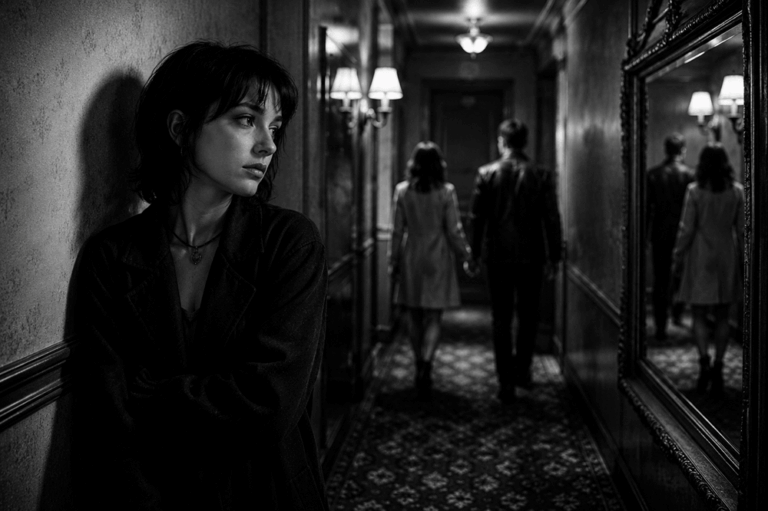

“Billie Jean” Lyrics Meaning: Michael Jackson’s Song About Temptation, Rumors and Denial
Michael Jackson’s “Billie Jean” is about a woman who claims that the narrator fathered her child, while he repeatedly denies that the baby is his.
Beneath that simple story is a darker song about temptation, reputation and the consequences of one careless encounter. Billie Jean is presented as beautiful and persuasive, but the narrator sees her as a threat capable of destroying his life with a single accusation.
The song never gives listeners enough evidence to prove exactly what happened. The narrator insists he is innocent, yet several details suggest he may have entered a relationship with Billie Jean and ignored the warnings of people around him.
That uncertainty is essential to the song.
“Billie Jean” is not simply about whether a paternity claim is true. It is about the fear of losing control over your own story once another person makes a believable accusation.
The central meaning is:
Attraction may last for one night, but the consequences—and the rumors—can follow someone much longer.
What does “Billie Jean” mean?
Billie Jean is the name of the woman at the center of the story.
She tells people that the narrator is the father of her son. He denies the claim, but she supports it by pointing to the child’s resemblance to him and apparently possesses a photograph that connects them.
The narrator describes Billie Jean as someone who attracts attention immediately. She moves through a room with confidence and convinces people that she is important.
Her beauty is part of her power.
The narrator appears to believe that she chose him deliberately. She does not merely want a private relationship; she wants public recognition that he belongs to her and has a responsibility to her child.
The song can therefore be read as a conflict between two stories:
- Billie Jean says they were together and that he fathered her baby.
- The narrator says her accusation is false.
- The public watches and decides which person to believe.
Michael Jackson explained in his autobiography that Billie Jean was not one specific woman. She represented the groupies he and his brothers encountered during their years of touring, particularly women who made claims about having relationships or children with members of the group.
Why does Billie Jean say the child is his?
The song does not provide Billie Jean’s full explanation.
We understand her position mainly through the narrator, who is already trying to discredit her. This means listeners never hear an independent version of events.
She apparently offers at least two forms of evidence:
- She says they had a romantic or sexual encounter.
- She believes her son resembles the narrator.
A photograph is also mentioned, showing a crying baby whose eyes supposedly look like his.
For Billie Jean, this resemblance supports her claim.
For the narrator, it increases his fear because other people may find the story convincing even if he continues denying it.
The child becomes more than a private family matter. He becomes physical evidence in a public argument.
Is the narrator telling the truth?
The song intentionally leaves room for doubt.
The narrator states clearly that he is not the father. However, his account includes details that make the situation complicated.
He acknowledges that he danced closely with Billie Jean and appears to admit that she came into his private space. He also remembers warnings about being careful with women and thinking seriously before acting.
Those warnings would be less relevant if absolutely nothing happened.
There are several possible interpretations.
He is completely innocent
Billie Jean may be an obsessive fan who invented the relationship and selected a famous man as the father of her child.
The narrator’s fear comes from knowing that a false story can damage his reputation even without proof.
They had an encounter, but he is not the father
The narrator may have spent a night with Billie Jean while believing that the relationship was casual.
She later named him as the father, either because she genuinely believed it or because she wanted a connection to him.
He is lying to protect himself
The repeated denial may sound suspicious to some listeners.
He may know that Billie Jean’s story is true but refuse to accept the responsibility or public damage attached to it.
The song never resolves these possibilities. Jackson performs the narrator’s fear convincingly, but emotional intensity does not automatically prove innocence.
Why is the denial repeated so often?
The narrator repeats his rejection of Billie Jean’s claim until it becomes the song’s central hook.
Repetition can communicate certainty, but it can also reveal panic.
Someone who feels completely secure might deny an accusation once and move on. The narrator cannot move on. He continues returning to the same sentence as though repeating it might protect him.
This creates two opposite effects.
On one hand, the chorus sounds firm and memorable. It appears to state the truth beyond question.
On the other, the repeated denial can make listeners wonder why he is so frightened.
The more he insists, the more the accusation dominates the song.
Even though he says Billie Jean is not his lover and the child is not his, nearly every part of the story revolves around her. She has already taken control of his thoughts.
What does the dancing scene mean?
Billie Jean first gains power over the narrator in a social setting where people are watching.
She enters with confidence, and the narrator becomes attracted to her. They eventually dance together, creating a visible connection.
Dancing works as both a literal event and a symbol of temptation.
On a dance floor, people can become physically close without discussing commitment or consequences. The moment may feel separate from ordinary responsibilities.
The narrator appears to believe that the dance is temporary.
Billie Jean interprets the connection differently—or later uses it as part of her claim.
The dance therefore represents the moment when control begins to shift.
Before dancing with her, the narrator can walk away. Afterward, other people have seen them together, and Billie Jean has a believable starting point for her story.
A public moment of attraction becomes evidence in a private dispute.
What does the “round” dance floor mean?
The song describes a dance floor shaped like a circle.
This creates a theatrical image, as though the narrator and Billie Jean are standing at the center of an arena while everyone else watches.
The circle may also suggest entrapment.
There is no clear beginning or ending to a circle. Once the narrator enters Billie Jean’s story, he cannot easily find a way out.
The accusation follows the same pattern:
- He denies the relationship.
- Billie Jean repeats her claim.
- People continue discussing it.
- He denies it again.
- The story begins another round.
The production reinforces this circular feeling. The bass line and drum pattern repeat with remarkable consistency, keeping the narrator inside the same anxious rhythm.
Why was the narrator warned to be careful?
Several people appear to have warned him about relationships and sexual temptation.
The message is that actions can produce consequences beyond the immediate moment.
A person may believe an encounter is casual while the other person develops stronger expectations. Pregnancy, jealousy, publicity and emotional attachment can transform a brief relationship into a permanent problem.
The warning is also connected to fame.
A successful performer may receive attention from people who are attracted not only to him but also to his celebrity status. That makes it difficult to know whether affection is genuine.
The narrator is warned to think carefully because his reputation gives other people a reason to create or exaggerate a connection with him.
He ignores the warning because Billie Jean is attractive and convincing.
The rest of the song shows the cost of that decision.
Is Billie Jean portrayed as a villain?
From the narrator’s perspective, yes.
He presents her as manipulative, seductive and dishonest. She attracts him, makes a serious accusation and refuses to disappear when he rejects her version of events.
However, the story is told entirely from his point of view.
Billie Jean does not receive a verse explaining what she experienced. We do not know whether she is deliberately lying, emotionally confused or sincerely convinced that he is the father.
This limitation matters.
The narrator controls the song, but he cannot completely control how listeners judge him. Some may accept his denial. Others may hear a powerful man dismissing a woman after a private relationship.
The uncertainty prevents Billie Jean from becoming a simple fictional villain.
She is frightening partly because she remains unknowable.
Why does the narrator describe her beauty so carefully?
Billie Jean’s appearance establishes why he ignored the warnings.
She is not presented as someone who forced him into the situation. He was drawn toward her and participated in the dance.
This makes the song partly about personal responsibility.
The narrator may believe that her later accusation is unfair, but he cannot pretend he made no choices of his own. He allowed attraction to override caution.
Her beauty also strengthens the danger.
The most threatening person is not always someone who appears frightening. Billie Jean is powerful because she looks desirable, behaves confidently and knows how to make people pay attention.
Temptation works only when the object being resisted is appealing.
What does the song say about fame?
“Billie Jean” can be understood as one of Jackson’s earliest major songs about the threatening side of celebrity.
Fame creates admiration, but it also attracts rumors, demands and people who feel personally connected to a performer they do not truly know.
For a celebrity, a private accusation can quickly become public entertainment.
The narrator does not appear most worried about a courtroom or financial responsibility. He is frightened by the story spreading among people around him.
Once the rumor begins, he cannot control who repeats it.
This is one of the song’s most lasting ideas:
Public attention can make a person powerful, but it also makes them vulnerable to stories told by others.
A famous name gives an accusation value. People want to hear it because it concerns someone they recognize.
Is “Billie Jean” based on a real person?
Jackson said Billie Jean was not one identifiable woman. He described her as a composite inspired by the groupies he observed around his brothers during the Jackson 5 years.
The song should therefore not be treated as a factual account of one paternity dispute.
Jackson used experiences associated with touring, obsessive attention and rumors to create a fictional narrative with the tension of a thriller.
That fictional structure allowed him to explore a wider fear: someone entering his life, making a claim and refusing to let him escape it.
The lack of one confirmed real Billie Jean also makes the song more universal. She can represent any person whose accusation threatens another person’s identity or reputation.
Why does the song sound so tense?
“Billie Jean” is built around one of pop music’s most recognizable rhythm sections.
The drumbeat is steady and restrained, while the bass line repeats with very little change. Rather than creating a joyful dance groove, the repetition feels watchful and suspicious.
The official Michael Jackson site credits Jackson with writing the song and creating its rhythm, vocal and synthesizer arrangements. Quincy Jones produced the recording, while Jackson performed both the lead and background vocals.
Several musical details create tension:
The bass line feels like footsteps
Its repeated movement suggests someone following the narrator.
Even when the lyrics pause, the threat remains present.
The drums rarely release the pressure
The beat is danceable, but it is also controlled and mechanical. It keeps moving forward without offering emotional comfort.
The synthesizers create darkness
Small electronic sounds appear around the vocals like flashes of suspicion or memory.
Jackson’s vocal sounds defensive
His breaths, cries and sharp changes in tone make the performance feel physically anxious.
The music does not simply accompany the story. It places listeners inside the narrator’s nervous system.
Why is the opening so long?
The instrumental introduction establishes the song’s identity before Jackson begins singing.
The drums enter first, followed by the bass line and additional layers. This gives listeners time to feel the groove and recognize the atmosphere.
Quincy Jones reportedly considered shortening the introduction, but Jackson believed it was essential because it made him want to dance.
The extended opening serves two purposes.
First, it makes the song immediately recognizable. Only a few seconds are needed before listeners know what is playing.
Second, it creates suspense. The story has not started, but the rhythm already suggests that something dangerous is approaching.
The narrator enters a world that feels established before he speaks, as though Billie Jean’s accusation is already waiting for him.
Why does Michael Jackson use vocal sounds and gasps?
Jackson’s nonverbal sounds function like emotional punctuation.
The sharp breaths, cries and whispered responses communicate reactions that ordinary sentences might weaken.
They suggest:
- Fear
- Disbelief
- Physical exhaustion
- Suspicion
- Urgency
- Attempts to defend himself
These sounds also make the performance feel private, as though listeners are hearing thoughts escaping before the narrator can control them.
The technique became one of Jackson’s recognizable vocal signatures, but in “Billie Jean” it has a specific dramatic purpose.
The narrator is not calmly explaining an old event.
He sounds as though he is still trapped inside it.
What does the music video mean?
The official video follows Jackson through a mysterious city while a photographer or detective attempts to capture evidence of him.
Wherever Jackson steps, ordinary pavement lights up. He appears able to transform his surroundings, yet he also remains impossible to photograph clearly.
The video builds on the song’s themes of fame, observation and uncertainty.
Jackson is constantly watched, but the camera cannot prove what it sees.
That mirrors the paternity story. People believe something happened, but direct evidence remains unclear.
The photographer represents the public appetite for proof. He follows Jackson because capturing the right image could turn private suspicion into a public fact.
Jackson, however, remains almost supernatural. He moves through the city without fully belonging to its reality.
The official short film can be viewed on Michael Jackson’s verified channel.
Why do objects light up under his feet?
The glowing pavement shows Jackson’s extraordinary presence.
He changes every space he enters. Ordinary objects become bright and magical simply because he touches them.
This can represent celebrity.
A famous person brings attention to places, clothing and people that might otherwise be ignored. Their presence creates value and spectacle.
However, the lights also reveal his location.
Each glowing tile marks where he has been, making it easier for the photographer to follow him.
His special power therefore creates both admiration and danger.
The same fame that makes him appear magical also prevents him from moving through the world unnoticed.
What does the photographer represent?
The photographer can represent journalists, gossip culture or any observer trying to expose a celebrity’s private life.
He is less interested in understanding Jackson than in obtaining an image.
A photograph would give him something that can be published, sold and treated as evidence.
Yet Jackson repeatedly escapes documentation. Pictures fail to show him clearly, and the photographer is eventually caught instead.
This ending reverses the power relationship.
The observer who believed he could control Jackson through the camera becomes the person trapped by his own pursuit.
The video suggests that watching someone does not guarantee understanding them.
A camera can capture an image, but it cannot automatically reveal the truth.
How did “Billie Jean” affect MTV?
The video became important in the history of MTV and the channel’s treatment of Black artists.
MTV initially built much of its identity around white rock performers and faced criticism for excluding Black musicians. CBS Records executive Walter Yetnikoff later recalled pressuring the channel to play “Billie Jean,” including threatening to withdraw CBS videos and publicly challenge MTV’s treatment of Jackson.
The video eventually entered heavy rotation and helped demonstrate that Black artists could attract MTV’s mainstream audience. Smithsonian Magazine identifies Jackson as a central figure in forcing change at the channel.
The achievement matters because the video was not only a commercial success.
It helped expand who could be presented as the center of global pop culture.
How did “Billie Jean” become connected to the moonwalk?
Jackson performed the song during the television special Motown 25: Yesterday, Today, Forever in 1983.
During the performance, he wore a sequined black jacket, shortened trousers, bright socks, loafers and one sparkling glove. He then performed the backward-gliding dance move that became known internationally as the moonwalk.
The song and the movement became inseparable.
The bass line provided enough space for Jackson to build suspense before revealing the dance. The performance transformed a recorded hit into a complete visual identity.
Afterward, audiences expected the moonwalk whenever he performed “Billie Jean.”
The song was no longer only about a mysterious woman and a disputed child. It became the soundtrack to one of the most recognizable images in popular entertainment.
Did “Billie Jean” win a Grammy?
“Billie Jean” won Best R&B Song and Best R&B Vocal Performance, Male, at the 26th Grammy Awards.
Those awards formed part of Jackson’s record-breaking eight-win night in 1984. The Recording Academy also notes that engineer Bruce Swedien worked through numerous vocal takes during the Thriller sessions, although an early take ultimately became the final vocal used for “Billie Jean.”
The song’s success came from more than its lyrics or danceability.
It combined:
- A suspenseful story
- A distinctive bass line
- Minimal but detailed production
- An emotionally dramatic vocal
- A groundbreaking video
- A career-defining live performance
Each element strengthened the others.
Why has “Billie Jean” remained popular?
The song can be enjoyed without following every part of its story.
Its drumbeat and bass line make it immediately danceable, while Jackson’s performance creates tension even for listeners who are not concentrating on the words.
At the same time, the narrative rewards closer attention.
Listeners continue debating whether the narrator is truthful because the song refuses to settle the question. Billie Jean may be dishonest, mistaken or telling a truth the narrator does not want to admit.
That uncertainty gives the song the structure of a mystery.
It also addresses fears that remain relevant:
- Being falsely accused
- Being exposed after a careless decision
- Discovering that another person understood a relationship differently
- Losing control over your reputation
- Having private behavior become public
- Being judged before evidence is clear
The specific story concerns paternity, but the emotional experience is broader.
Final meaning
“Billie Jean” is about a man confronted by a woman who claims that he fathered her child.
He denies the accusation, but the song leaves enough uncertainty to prevent listeners from knowing exactly what happened. He admits that Billie Jean attracted him, remembers being warned to act carefully and appears terrified by the evidence she presents.
The repeated denial may express innocence, guilt or panic.
Billie Jean herself remains equally mysterious. The narrator portrays her as manipulative, but because she never speaks directly, listeners cannot test his version of events against hers.
That unresolved conflict is the song’s greatest strength.
On one level, “Billie Jean” warns against temptation and careless relationships. On another, it explores the darker side of fame, where strangers, fans and the media can compete to define a public figure’s identity.
The narrator wants one statement to end the story.
It cannot.
Whether the accusation is true or false, Billie Jean has already succeeded in making herself unforgettable.
The deeper message is that a person may deny a rumor, escape a photographer and walk away from an encounter—but once a story captures the public imagination, it can continue dancing long after the people involved want it to stop.